12 या 24 घंटे की Home Nursing: किसे क्या चाहिए?
12 या 24 घंटे की home nursing किस मरीज के लिए उचित है? Clinical जरूरत, रात की सुरक्षा, caregiver की भूमिका और discharge plan समझें।
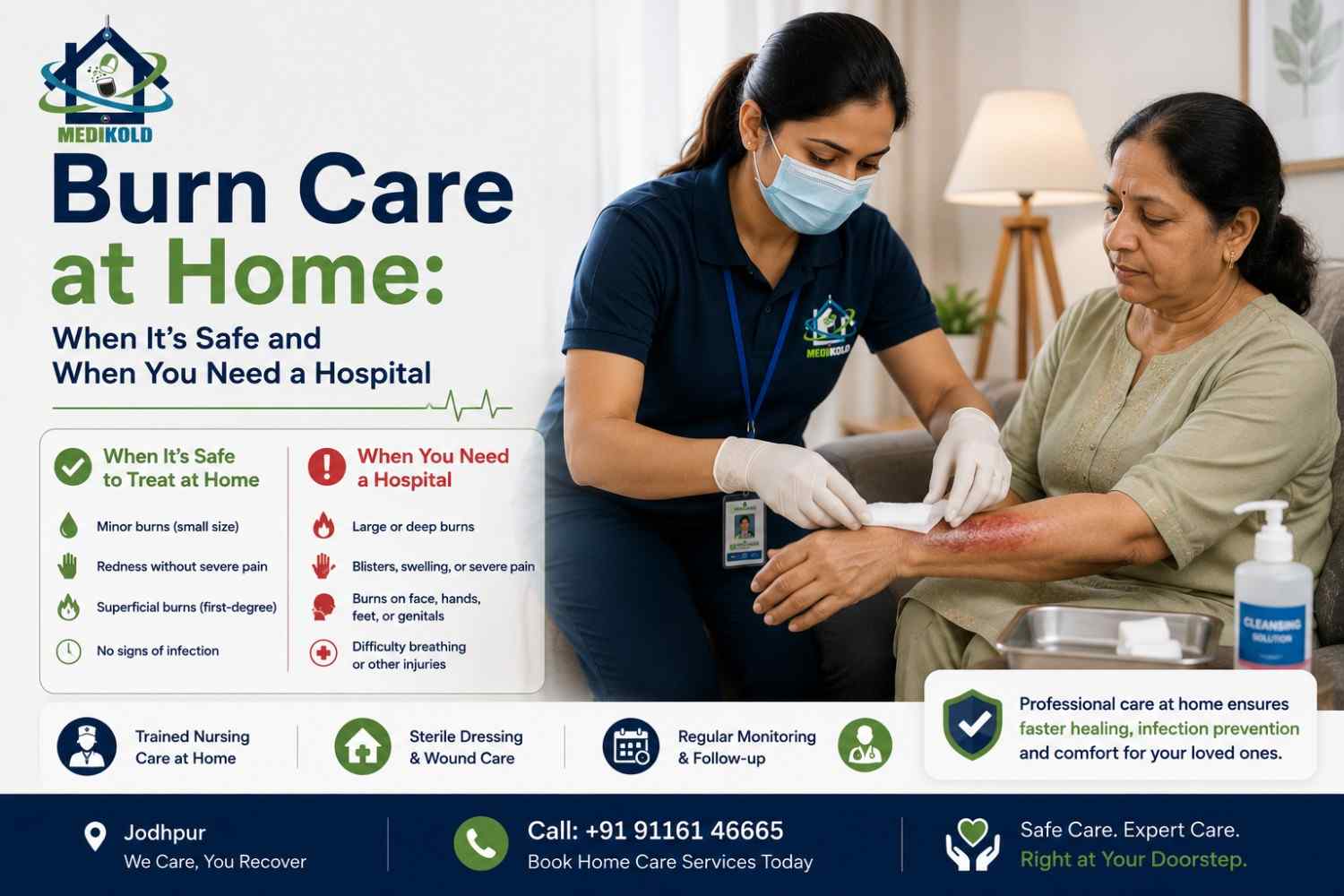
Most minor burns can be managed safely at home, but knowing where that line sits, and what proper home burn care actually involves, matters.
Burns are common household injuries, from kitchen accidents to hot water spills, and while many minor burns can be safely and effectively managed at home, some burns genuinely need urgent hospital assessment. Knowing the difference, and knowing how to properly care for a burn that is appropriate for home management, are both important, and the two questions get confused more often than they should.
These affect only the outer layer of skin, causing redness and pain without blistering, similar to a typical sunburn. These are generally appropriate for home care.
These extend into the deeper skin layer, causing blistering, significant pain, and swelling. Smaller second-degree burns can often be managed at home, but larger ones, or those on sensitive areas, need professional assessment.
These extend through all skin layers, and sometimes into underlying tissue, and can appear white, leathery, or charred. These always require urgent hospital care, and notably, can be less painful than more superficial burns because nerve endings themselves have been damaged, which is misleading if severity is judged by pain alone.
Any third-degree burn, regardless of size.
Second-degree burns larger than about the size of the patient's palm.
Burns on the face, hands, feet, groin, or major joints, regardless of size, due to functional and cosmetic risk.
Burns caused by chemicals or electricity, which often cause deeper damage than they initially appear to.
Any burn in an infant, young child, or elderly person, where the threshold for professional assessment should be lower.
Signs of infection developing in a burn already being managed at home, increasing pain, spreading redness, pus, or fever.
Cool the burn under cool (not ice-cold) running water for 10–20 minutes as soon as possible after the injury. This meaningfully reduces tissue damage and pain when done promptly. Avoid ice, butter, or toothpaste, all common but genuinely harmful home remedies that can worsen tissue damage or increase infection risk.
Gently clean the area, avoid breaking any intact blisters (they provide natural protection against infection while healing), and cover with a clean, non-stick dressing. Our related article on professional wound dressing at home covers dressing technique in more detail, and burns benefit from the same careful, clean approach as other wounds.
Dressings typically need changing daily or as advised, with the wound checked each time for early signs of infection. For burns that are healing more slowly than expected, or where home dressing technique is uncertain, professional wound care support is a reasonable step rather than continuing to manage uncertainty alone.
Over-the-counter pain relief is generally appropriate for minor burns, but persistent, worsening, or severe pain despite standard pain relief is itself a signal to seek professional assessment rather than simply increasing medication independently.
For burns that need more than basic first aid, but don't require hospital admission, larger area burns healing under supervision, burns in patients with diabetes or poor circulation where healing is naturally slower, or simply families wanting professional reassurance during the healing process, our burn care service and broader dressing at home service bring qualified wound care directly to the home in Jodhpur, combining clinical oversight with the convenience of not needing repeated hospital visits during recovery.
How a burn is cared for during the healing process meaningfully affects the eventual scarring, not just how quickly it closes. Keeping the wound consistently moist with appropriate dressings, rather than allowing it to dry out, generally supports better healing with less scarring than a dry, exposed wound. Protecting healing or newly healed skin from sun exposure for several months reduces the risk of the area darkening permanently, a particularly relevant consideration in Jodhpur's strong sun. For burns on visible or functionally important areas, hands, face, over joints, professional guidance on dressing choice and, where needed, referral for scar management support is worth the extra step rather than assuming any dressing will do.
Children's skin is thinner than adult skin, meaning a burn that would be relatively minor on an adult can be proportionally more serious on a child, and children also dehydrate more quickly relative to their body size following a significant burn. Any burn on a child beyond a very small, clearly superficial area deserves a lower threshold for professional assessment than the same-looking burn on an adult, and this caution is appropriate rather than overcautious given how differently pediatric skin responds.
Yes, healing and newly healed skin is more vulnerable to sun damage and discoloration, so covering the area or using sun protection for several months afterward is generally recommended.
Yes, itching is a common part of the healing process as skin regenerates, though scratching should be avoided since it can damage healing tissue and increase infection risk.
Increasing pain after the first day or two, spreading redness, warmth, swelling, pus, or fever are signs of possible infection that warrant prompt medical evaluation rather than continued home management alone.
Pure aloe vera gel is commonly used and generally considered soothing for minor, superficial burns, though it should not replace proper cooling and cleaning, and shouldn't be used on broken skin or more significant burns.
No, these are common home remedies that can trap heat, worsen tissue damage, and increase infection risk. Cool running water is the correct immediate response.
No, intact blisters provide natural protection against infection while the burn heals underneath. If a blister breaks on its own, keep the area clean and covered.
First-degree burns often heal within a week, while second-degree burns can take two to three weeks or longer, depending on size and depth, and proper care throughout meaningfully affects healing speed.
Yes, this remains a risk, which is why ongoing monitoring for redness, swelling, discharge, or fever matters throughout the healing period, not just in the first few days.
Not all, minor first-degree and small second-degree burns can often be managed with careful home first aid, but professional support is valuable for larger burns, slow-healing wounds, or when there's uncertainty about proper technique.
Often yes, since diabetes can impair wound healing and increase infection risk, making professional monitoring more important even for burns that might otherwise be managed at home in someone without diabetes.
This article is for educational purposes and does not replace personalized medical advice. Please consult a qualified physician before making changes to your treatment, medication, or health screening plan.
12 या 24 घंटे की home nursing किस मरीज के लिए उचित है? Clinical जरूरत, रात की सुरक्षा, caregiver की भूमिका और discharge plan समझें।
“No acute bony injury” describes what was visible on an X-ray, not every possible cause of pain. Learn common report terms, when follow-up matters and which symptoms need urgent care.
Bedridden patient के लिए trained nurse और caregiver की भूमिका, skill, daily tasks, red flags और सही home-care plan चुनने का practical comparison।
These affect only the outer layer of skin, causing redness and pain without blistering, similar to a typical sunburn. These are generally appropriate for home care.
These extend into the deeper skin layer, causing blistering, significant pain, and swelling. Smaller second-degree burns can often be managed at home, but larger ones, or those on sensitive areas, need professional assessment.
These extend through all skin layers, and sometimes into underlying tissue, and can appear white, leathery, or charred. These always require urgent hospital care, and notably, can be less painful than more superficial burns because nerve endings themselves have been damaged, which is misleading if severity is judged by pain alone.
Cool the burn under cool (not ice-cold) running water for 10–20 minutes as soon as possible after the injury. This meaningfully reduces tissue damage and pain when done promptly. Avoid ice, butter, or toothpaste, all common but genuinely harmful home remedies that can worsen tissue damage or increase infection risk.
Gently clean the area, avoid breaking any intact blisters (they provide natural protection against infection while healing), and cover with a clean, non-stick dressing. Our related article on professional wound dressing at home covers dressing technique in more detail, and burns benefit from the same careful, clean approach as other wounds.
Dressings typically need changing daily or as advised, with the wound checked each time for early signs of infection. For burns that are healing more slowly than expected, or where home dressing technique is uncertain, professional wound care support is a reasonable step rather than continuing to manage uncertainty alone.
Yes, healing and newly healed skin is more vulnerable to sun damage and discoloration, so covering the area or using sun protection for several months afterward is generally recommended.
Yes, itching is a common part of the healing process as skin regenerates, though scratching should be avoided since it can damage healing tissue and increase infection risk.
Increasing pain after the first day or two, spreading redness, warmth, swelling, pus, or fever are signs of possible infection that warrant prompt medical evaluation rather than continued home management alone.
Pure aloe vera gel is commonly used and generally considered soothing for minor, superficial burns, though it should not replace proper cooling and cleaning, and shouldn't be used on broken skin or more significant burns.
No, these are common home remedies that can trap heat, worsen tissue damage, and increase infection risk. Cool running water is the correct immediate response.
No, intact blisters provide natural protection against infection while the burn heals underneath. If a blister breaks on its own, keep the area clean and covered.
First-degree burns often heal within a week, while second-degree burns can take two to three weeks or longer, depending on size and depth, and proper care throughout meaningfully affects healing speed.
Yes, this remains a risk, which is why ongoing monitoring for redness, swelling, discharge, or fever matters throughout the healing period, not just in the first few days.
Not all, minor first-degree and small second-degree burns can often be managed with careful home first aid, but professional support is valuable for larger burns, slow-healing wounds, or when there's uncertainty about proper technique.
Often yes, since diabetes can impair wound healing and increase infection risk, making professional monitoring more important even for burns that might otherwise be managed at home in someone without diabetes.
Stay updated with our latest medical news, insights, and exclusive health tips delivered straight to your inbox.