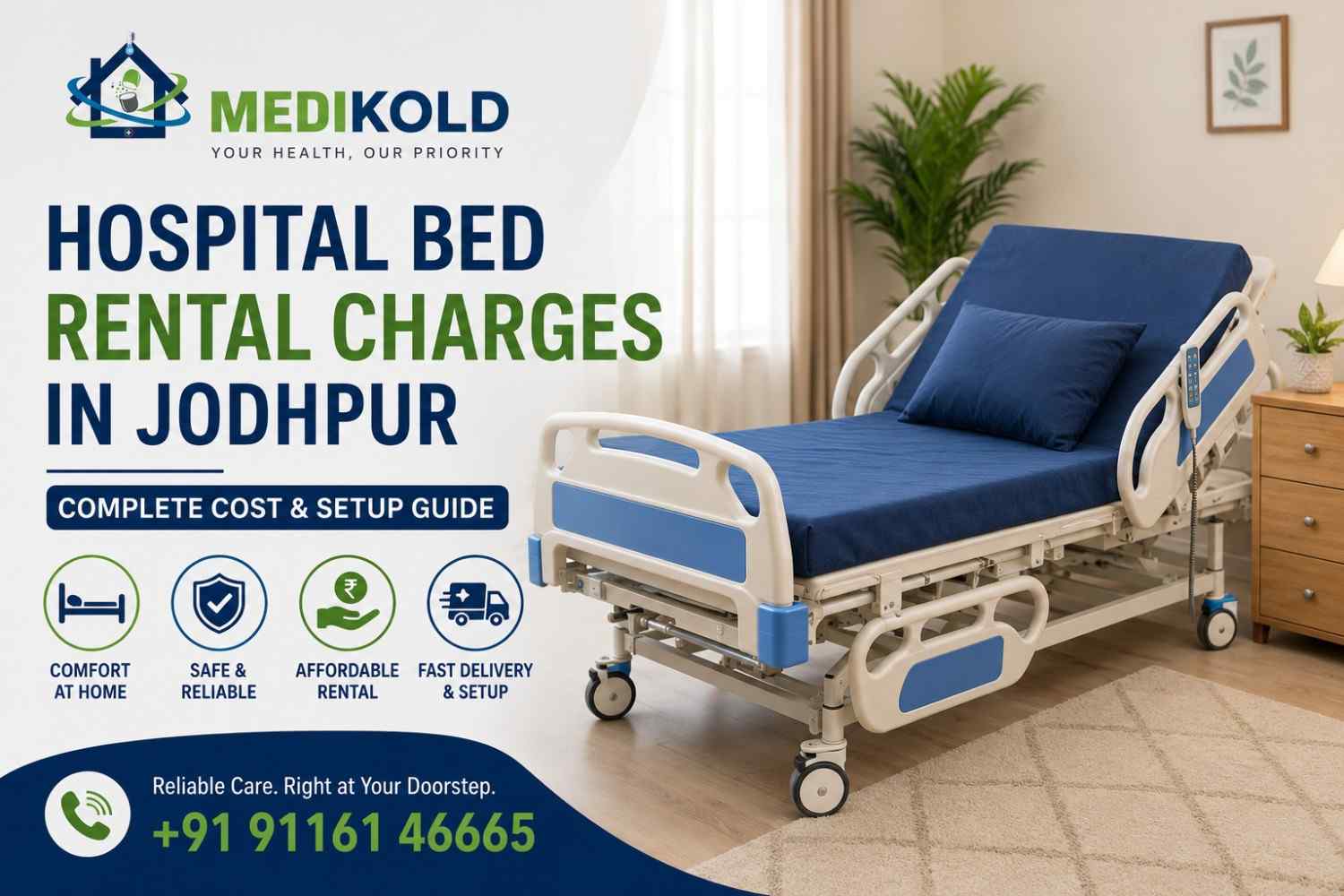
How to Set Up Patient Care at Home in Jodhpur: Essential Equipment Checklist
Caring for a patient at home requires more than just attention and support. In many cases, the right medical equipment can make recovery safer, more comfortable, and far more manageable for both the patient and the family. If you are planning home care in Jodhpur, it is important to understand which tools and support items are actually needed and how they improve day-to-day care.
A proper home care setup helps reduce stress, supports recovery, and makes it easier to monitor the patient’s condition without repeated hospital visits.
Why Home Care Equipment Matters
When a patient is recovering at home, the environment should support safety, movement, hygiene, and medical monitoring. The right equipment makes it easier to provide care without unnecessary discomfort or risk.
This is especially important for elderly patients, post-surgical recovery, long-term illness, mobility issues, and chronic conditions that require regular monitoring. Families also benefit from professional home nursing services in Jodhpur for expert medical support.
Essential Equipment for Home Patient Care
The exact setup depends on the patient’s condition, but the most common equipment used in home care includes:
| Equipment | Purpose |
|---|---|
| Hospital Bed | Supports comfort, positioning, and safe recovery |
| Oxygen Support | Helps patients who need respiratory assistance |
| Wheelchair | Improves mobility and transport within the home |
| Blood Pressure Monitor | Useful for regular health monitoring |
| Pulse Oximeter | Tracks oxygen levels quickly at home |
| Thermometer | Helps check for fever and infection signs |
How to Decide What You Really Need
Not every patient needs the same setup. A short-term recovery case may only need a few essentials, while long-term care may require a more complete arrangement. Choosing the wrong equipment can increase costs without improving care.
The best approach is to first understand the patient’s condition and then prepare the home accordingly.
1. Post-Surgery Recovery
Patients recovering after surgery may need a hospital bed, monitoring tools, and mobility support. Comfort and proper positioning become important during this stage. If the patient is recovering after orthopedic surgery, following a post knee replacement care plan can support faster recovery.
2. Elderly Care
Older patients often need support with walking, seating, blood pressure monitoring, and oxygen tracking. Equipment should make daily life easier and safer. Regular doctor at home visits can also help monitor their overall health.
3. Chronic Disease Management
Patients with long-term conditions like diabetes, blood pressure issues, or respiratory problems often need regular monitoring tools at home. Routine lab tests at home help track their health without repeated hospital visits.
4. Limited Mobility
If a patient cannot move around easily, supportive equipment like a wheelchair or adjustable bed can make care much more practical. In many cases, physiotherapy at home can also improve mobility and speed up recovery.
Benefits of a Proper Home Care Setup
A well-planned home care arrangement offers several advantages:
- Improves patient comfort and safety
- Helps families manage care with less stress
- Supports regular health monitoring
- Reduces unnecessary hospital visits
- Makes recovery easier and more organized
Why Quality Equipment Makes a Difference
Poor-quality equipment can create problems instead of solving them. Unstable beds, inaccurate monitoring devices, or unsuitable mobility tools can make home care harder. That is why choosing reliable medical support matters.
If you want to explore equipment options for patient care, browse our medical equipment for home care.
Common Mistakes Families Make
Many families either buy too much equipment or miss the basics completely. Some also choose items without understanding the patient’s actual condition.
Avoid these mistakes:
- Buying equipment before understanding the patient’s needs
- Ignoring monitoring tools like thermometer or BP machine
- Choosing comfort items instead of essential support items
- Not planning for long-term use if recovery will take time
How to Build the Right Setup
The right home care setup should be practical, safe, and matched to the patient’s condition. Start with the essentials, then add more support only if needed.
A doctor or home healthcare expert can help decide which equipment is necessary and which items are optional.
Quick Home Care Checklist
Before starting care at home, check whether you have:
| Checklist Item | Status |
|---|---|
| Comfortable bed or support arrangement | Ready / Not Ready |
| Monitoring devices | Ready / Not Ready |
| Mobility support | Ready / Not Ready |
| Emergency contact plan | Ready / Not Ready |
Related Articles
- Home Nursing Services in Jodhpur: Complete Guide to Quality Care at Home
- Home Nursing Charges in Jodhpur: What Affects the Cost?
- Doctor Visit at Home Charges in Jodhpur: What to Expect?
Final Takeaway
Setting up patient care at home is not about collecting every possible device. It is about choosing the right support for the patient’s actual condition. With the correct equipment, home care becomes safer, more comfortable, and far more effective.
If you are planning home healthcare in Jodhpur, start with the essentials, review the patient’s needs carefully, and use reliable equipment to create a practical care environment. For personalized guidance, you can also book an appointment with our healthcare team.