Bedridden Patient के लिए Nurse चाहिए या Caregiver? दोनों में क्या अंतर है?
Bedridden patient के लिए trained nurse और caregiver की भूमिका, skill, daily tasks, red flags और सही home-care plan चुनने का practical comparison।
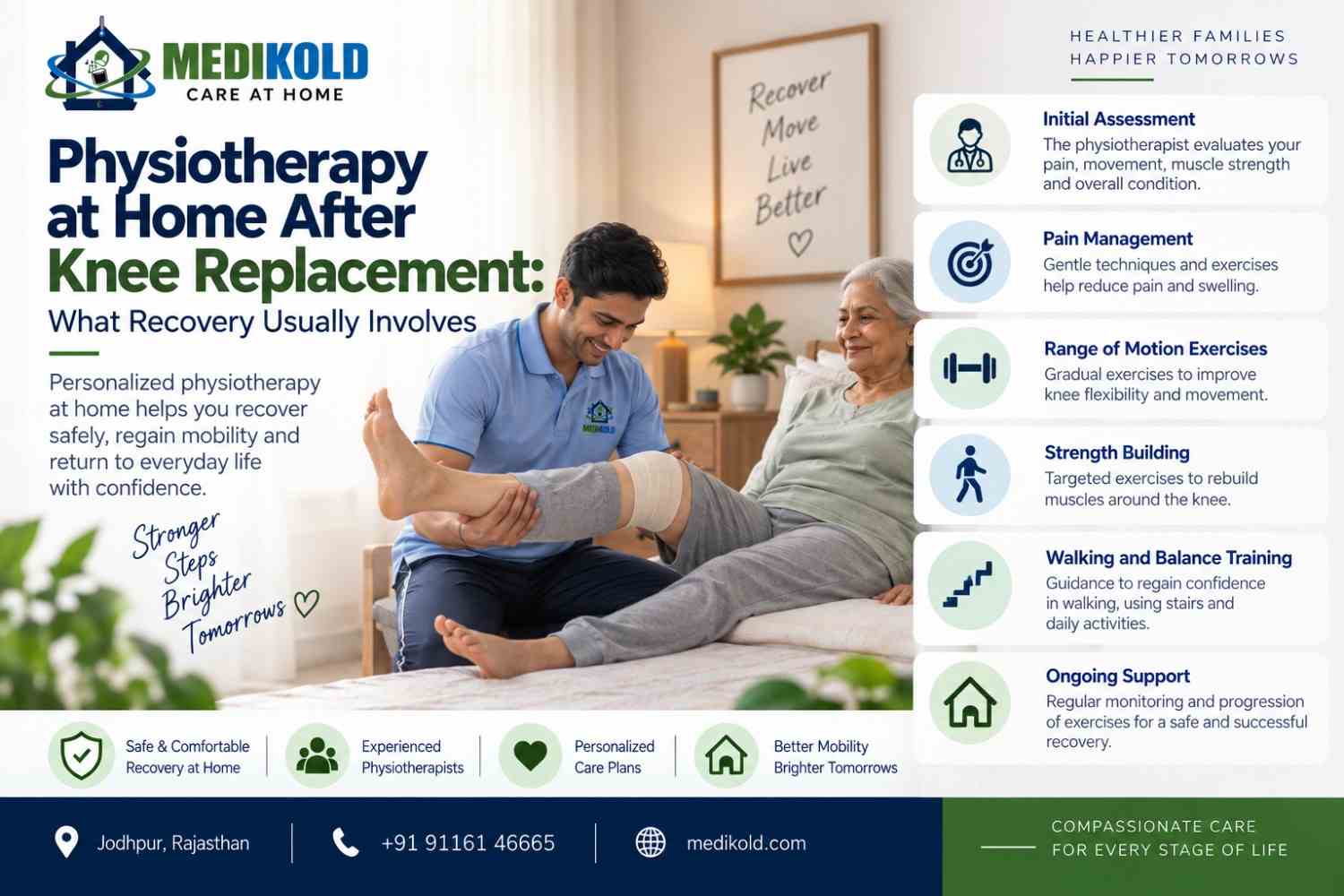
Home physiotherapy can support safe recovery after knee replacement when it follows the surgeon’s plan and appropriate progression.
Knee replacement surgery relieves pain and restores function for many patients, but the artificial joint alone does not create a strong, mobile knee. Structured physiotherapy in the weeks and months after surgery is what actually rebuilds strength, range of motion, balance, and walking confidence. Physiotherapy delivered at home can make this process considerably easier for patients who find repeated trips to a clinic tiring, painful, or logistically difficult during early recovery.
Home-based rehabilitation is not a lesser version of clinic-based therapy. When it follows the surgeon's protocol and is delivered by a qualified physiotherapist, it can be just as effective, while removing the burden of travel during a period when the knee is swollen, stiff, and still healing.
The surgery replaces damaged joint surfaces, but the surrounding muscles, particularly the quadriceps, have usually weakened over months or years of painful movement before surgery. Scar tissue can also form around the new joint, and without deliberate, guided movement, this tissue can restrict range of motion permanently. Physiotherapy addresses both problems together: rebuilding muscle strength while progressively restoring the knee's ability to bend and straighten fully.
Patients who skip or under-commit to physiotherapy often end up with a knee that is technically functional but stiff, weak, or painful with activity, a considerably worse outcome than the surgery was intended to achieve. The investment in consistent rehabilitation in the first three months has a disproportionate effect on the final result compared with any point later in recovery.
In the first days after surgery, physiotherapy typically focuses on gentle range-of-motion exercises, ankle pumps to support circulation, and safe techniques for getting in and out of bed or a chair. Elevation, ice, and prescribed pain relief are usually combined with movement rather than used as a substitute for it, since prolonged rest actually slows recovery and increases stiffness.
Most patients begin walking with a walker or crutches within a day or two of surgery, progressing to a cane and eventually unassisted walking as strength and confidence improve. A home physiotherapist can assess gait pattern, correct compensations that develop from favouring the operated leg, and progress the walking aid at a pace matched to the individual's healing and balance.
As swelling settles, the focus usually shifts toward progressive strengthening of the quadriceps, hamstrings, and hip muscles, alongside continued work on bending and straightening the knee fully. A physiotherapist adjusts exercises based on how the joint responds, pushing gently against stiffness without forcing movement that causes sharp pain. Achieving full knee extension (straightening) is often prioritised early, since a knee that heals in a slightly bent position can affect walking permanently.
Balance and proprioception exercises, retraining the body's sense of joint position, are introduced once basic strength and pain control allow it. This becomes particularly important for reducing fall risk as patients regain independence with walking and stairs.
Recovery is rarely linear, and timelines vary by individual, but home physiotherapy typically progresses through several broad phases: early protected movement in the first two weeks, progressive strengthening and gait normalisation from roughly weeks two to six, and a return toward fuller activity and more demanding exercises from around six weeks onward, guided throughout by the surgeon's specific instructions and the patient's actual progress rather than a fixed calendar.
Comparing recovery speed against another patient's experience is rarely useful, since pain tolerance, pre-surgical strength, other health conditions, and adherence to the exercise program all affect the pace. A physiotherapist following the individual's actual progress is a far better guide than a generic timeline.
Clear walking paths of loose rugs, trailing cables, and clutter before the patient returns home. Arrange a stable chair with firm arms at a comfortable height, since standing from a low or soft chair places unnecessary strain on a healing knee. Keep a walker or crutches within reach, and ensure the bathroom is set up for safe transfers, with a raised toilet seat or grab rails if recommended.
Stairs deserve particular planning. Confirm with the physiotherapist which leg leads going up and which leads going down during the early recovery period, and ensure a secure handrail is available. Families should not assume a patient can safely navigate stairs alone simply because they managed it once with supervision.
Some pain, swelling, warmth, and bruising around the knee is expected for several weeks after surgery, and physiotherapy exercises can temporarily increase discomfort as tissue is stretched and strengthened. Prescribed pain relief, ice, and elevation are typically used alongside exercise, not as an alternative to it, since undertreated pain often leads patients to avoid movement entirely.
Warning signs that need prompt medical attention include a sudden increase in calf swelling or pain, particularly on one side, since this can indicate a blood clot; new chest pain or breathlessness; fever; increasing redness, warmth, or drainage from the surgical wound; or a sudden loss of ability to bear weight that was previously possible. These symptoms should not wait for the next scheduled physiotherapy session.
Knee replacement recovery rarely involves physiotherapy in isolation. Wound checks, medication management, and general monitoring for complications all matter alongside rehabilitation exercises. Families managing a complex recovery, particularly for elderly patients or those with other health conditions, can review home nursing services in Jodhpur for coordinated support alongside physiotherapy, and read more about what a post-surgery home care plan typically requires in the weeks following major surgery.
Our home physiotherapy service in Jodhpur is built specifically around post-surgical rehabilitation, including knee and hip replacement recovery, with therapists trained to progress exercises safely against the surgeon's protocol rather than a generic exercise sheet.
Depending on the home layout and the patient's mobility, additional equipment such as a raised toilet seat, shower chair, adjustable bed, or specific mobility aids may make daily activities considerably safer during the first weeks. Visit MediKold medical equipment to coordinate equipment choices with the physiotherapy and nursing plan, rather than purchasing items independently that may not match the patient's actual needs.
It is common for patients to feel discouraged at some point during recovery, particularly if stiffness persists longer than hoped or a setback occurs after a promising week. Persistent stiffness, a knee that will not fully straighten or bend past a certain point after several weeks of consistent therapy, or pain that is not gradually improving should be discussed with the surgeon and physiotherapist together, since occasionally additional intervention is needed to address scar tissue or an underlying complication.
Consistency matters more than intensity. Patients who complete their prescribed exercises regularly, even briefly, generally do better than those who attempt long, infrequent sessions. A home physiotherapist can help build a routine that fits realistically into daily life rather than one that is abandoned after the first difficult week.
Arrange Home Physiotherapy After Knee Replacement
It typically begins within the first few days after surgery, following the surgeon's clearance, focusing initially on gentle movement rather than strenuous exercise.
Some discomfort during stretching and strengthening is expected, but sharp, severe, or rapidly worsening pain should be reported rather than pushed through.
Most patients see substantial improvement within three months, though full strength and comfort can continue improving for up to a year. Individual pace varies considerably.
Yes, many patients benefit from coordinated physiotherapy and nursing support, particularly for wound checks, medication management, and general post-surgical monitoring.
Persistent stiffness despite consistent therapy should be reassessed by the surgeon, since additional treatment may occasionally be needed to address scar tissue.
Not necessarily. Strength, balance, and full range of motion often continue improving with structured therapy even after independent walking is achieved.
Sudden calf swelling or pain, chest pain, breathlessness, fever, or worsening wound redness and drainage all require prompt medical evaluation rather than waiting for a scheduled visit.
Yes, with an appropriately trained physiotherapist and, where needed, nursing or caregiver support, home-based rehabilitation is generally safe and effective for elderly patients.
This article is for educational purposes and does not replace personalised medical advice. Please consult your surgeon and treating physiotherapist for an individual recovery plan.
Bedridden patient के लिए trained nurse और caregiver की भूमिका, skill, daily tasks, red flags और सही home-care plan चुनने का practical comparison।
घर पर Ryles या nasogastric tube feeding के लिए position check, upright posture, hygiene, flushing, medicine safety और danger signs की practical guide।
Foley catheter change interval हर मरीज में अलग हो सकता है. जानें blockage के संकेत, safe troubleshooting और कब nurse या hospital से तुरंत संपर्क करना चाहिए.
In the first days after surgery, physiotherapy typically focuses on gentle range-of-motion exercises, ankle pumps to support circulation, and safe techniques for getting in and out of bed or a chair. Elevation, ice, and prescribed pain relief are usually combined with movement rather than used as a substitute for it, since prolonged rest actually slows recovery and increases stiffness.
Most patients begin walking with a walker or crutches within a day or two of surgery, progressing to a cane and eventually unassisted walking as strength and confidence improve. A home physiotherapist can assess gait pattern, correct compensations that develop from favouring the operated leg, and progress the walking aid at a pace matched to the individual's healing and balance.
It typically begins within the first few days after surgery, following the surgeon's clearance, focusing initially on gentle movement rather than strenuous exercise.
Some discomfort during stretching and strengthening is expected, but sharp, severe, or rapidly worsening pain should be reported rather than pushed through.
Most patients see substantial improvement within three months, though full strength and comfort can continue improving for up to a year. Individual pace varies considerably.
Yes, many patients benefit from coordinated physiotherapy and nursing support, particularly for wound checks, medication management, and general post-surgical monitoring.
Persistent stiffness despite consistent therapy should be reassessed by the surgeon, since additional treatment may occasionally be needed to address scar tissue.
Not necessarily. Strength, balance, and full range of motion often continue improving with structured therapy even after independent walking is achieved.
Sudden calf swelling or pain, chest pain, breathlessness, fever, or worsening wound redness and drainage all require prompt medical evaluation rather than waiting for a scheduled visit.
Yes, with an appropriately trained physiotherapist and, where needed, nursing or caregiver support, home-based rehabilitation is generally safe and effective for elderly patients.
Stay updated with our latest medical news, insights, and exclusive health tips delivered straight to your inbox.