Ryles Tube से Feeding घर पर कैसे दी जाती है? Caregiver को क्या सावधानी रखनी चाहिए?
घर पर Ryles या nasogastric tube feeding के लिए position check, upright posture, hygiene, flushing, medicine safety और danger signs की practical guide।
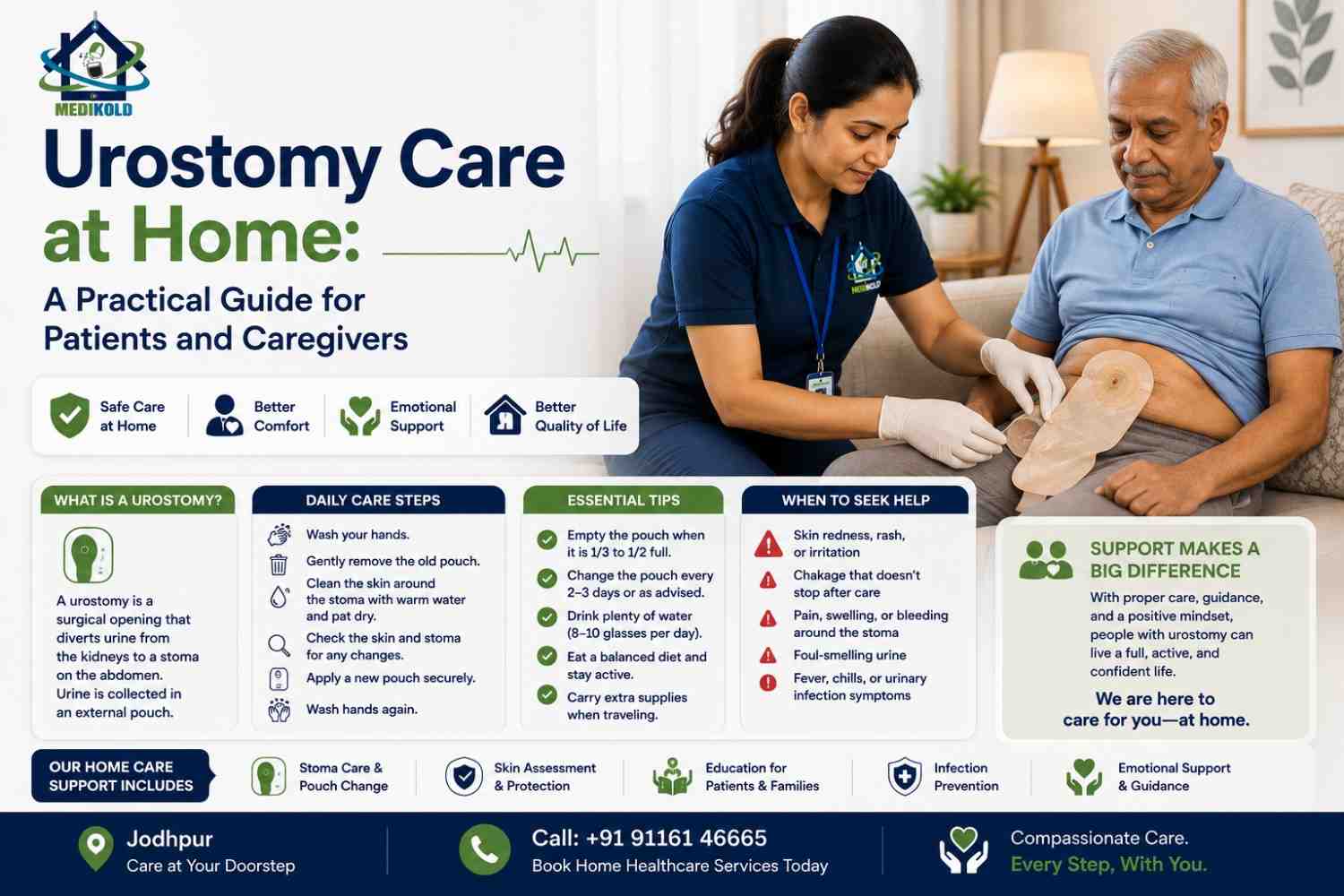
Learning to manage a urostomy at home takes time and the right guidance. Here's what patients and caregivers actually need to know.
A urostomy, a surgically created opening (stoma) that diverts urine from the body into an external collection pouch, typically following bladder surgery or in cases of certain congenital or neurological conditions, represents a genuinely significant adjustment for both patients and their families alike. With proper guidance, most people learn to manage their urostomy confidently and return to a largely normal daily life, but the initial learning period benefits considerably from structured, hands-on support rather than being figured out from instructions alone.
Unlike a colostomy, a urostomy continuously drains urine rather than passing output at intervals, which means the collection pouch needs regular emptying throughout the day and the whole appliance needs periodic changing, typically every three to seven days depending on the specific product and individual skin response.
The pouch should generally be emptied when it's about a third to half full, rather than waiting until it's completely full, since an overly full pouch is more likely to detach or leak. Most systems include a drainage valve or tap specifically designed for this, without needing to remove the whole appliance.
Changing the full appliance (the skin barrier and pouch together, or the pouch alone if using a two-piece system) requires careful technique: gently removing the old appliance, cleaning and thoroughly drying the skin around the stoma, checking the stoma and surrounding skin for any changes, and applying the new appliance with correct positioning to avoid urine contact with skin, which is the primary cause of skin irritation.
The skin around a urostomy is particularly vulnerable to irritation from urine contact, and a properly fitted appliance with a correctly sized opening is the single most important factor in preventing this. Skin barrier products and careful attention to fit make a meaningful difference to long-term comfort and skin health.
Frequent leakage usually indicates an issue with appliance fit, sizing, or application technique, worth troubleshooting with a professional rather than simply changing the appliance more frequently, which doesn't address the underlying cause.
Redness, soreness, or breakdown of the skin around the stoma is common, particularly in the early adjustment period, and usually responds well to correcting fit issues and using appropriate skin barrier products, though persistent or worsening irritation warrants professional assessment.
Patients with a urostomy have a somewhat elevated risk of urinary tract infections, and staying well hydrated, along with proper hygiene during appliance changes, helps reduce this risk. Signs of infection, cloudy or foul-smelling urine, fever, or back pain, warrant prompt medical attention.
The first several weeks after urostomy surgery are typically the steepest part of the learning curve, and most patients become considerably more confident and efficient with practice and consistent guidance. Having a professional available during this period, to demonstrate technique, troubleshoot problems, and answer questions as they come up, makes a genuine difference to how quickly and confidently patients adapt.
Our urostomy care service in Jodhpur provides hands-on training and ongoing support for patients and family caregivers, from the initial post-surgical adjustment period through long-term management, so that questions and problems can be addressed promptly by someone experienced, rather than through trial and error alone. This kind of structured support pairs naturally with the broader post-surgery home care most urostomy patients also need in the weeks following surgery.
Beyond the practical skills, adjusting emotionally to life with a urostomy is a real part of the process that deserves acknowledgment, not just the mechanics of appliance care. Many patients feel self-conscious or anxious about the stoma initially, worried about visibility under clothing, odour, or how it might affect intimate relationships. These concerns generally ease considerably with time and confidence, and connecting with others who have gone through the same adjustment, whether through a support group or simply an experienced nurse willing to talk through concerns honestly, often helps more than practical instruction alone.
With proper planning and a bit of practice, most patients return fully to normal daily activities, including work, travel, and regular exercise, without any significant lasting limitation at all. Carrying spare supplies when away from home, planning for appliance changes around travel schedules, and knowing how to manage a leak discreetly if one occurs are practical skills that come with experience and, ideally, guidance from someone who has helped other patients navigate the same situations before.
Yes, most patients can return to a wide range of physical activity once healed and confident with their appliance, though contact sports may need additional protective planning discussed with your surgeon.
Yes, many providers, including ours, can arrange for regular supply delivery, reducing the burden of repeated trips to source appliances and accessories.
This varies by individual, but most patients report feeling reasonably confident within four to six weeks of consistent practice and support, with continued improvement beyond that.
Adequate fluid intake is generally the main dietary recommendation, though your surgical team may provide additional specific guidance based on your individual situation.
Yes, most modern appliances are secure and water-resistant enough for normal exercise and swimming, though it's worth double-checking the seal beforehand and having a spare appliance available when out.
This varies by individual and product, typically every three to seven days, though skin condition and appliance performance should guide the exact schedule rather than a fixed rule.
Some irritation during the adjustment period is common, but persistent or worsening irritation usually indicates a fit or technique issue worth addressing with professional support rather than accepting as inevitable.
Yes, most urostomy appliances are water-resistant and allow normal showering and bathing, though specific product instructions should be followed.
Adequate hydration is generally recommended to help reduce urinary tract infection risk, though specific fluid targets should be discussed with your physician based on your overall health.
Yes, and this is often valuable, particularly during the initial adjustment period or for patients who need assistance with the physical aspects of appliance changes.
Signs of infection (fever, cloudy or foul-smelling urine, back pain), persistent bleeding from the stoma, or a stoma that appears to be changing colour warrant prompt medical evaluation.
This article is for educational purposes and does not replace personalized medical advice. Please consult a qualified physician before making changes to your treatment, medication, or health screening plan.
घर पर Ryles या nasogastric tube feeding के लिए position check, upright posture, hygiene, flushing, medicine safety और danger signs की practical guide।
Foley catheter change interval हर मरीज में अलग हो सकता है. जानें blockage के संकेत, safe troubleshooting और कब nurse या hospital से तुरंत संपर्क करना चाहिए.
घर पर urine catheter की hygiene, drainage bag position, blockage checks और infection के warning signs की practical caregiver guide।
The pouch should generally be emptied when it's about a third to half full, rather than waiting until it's completely full, since an overly full pouch is more likely to detach or leak. Most systems include a drainage valve or tap specifically designed for this, without needing to remove the whole appliance.
Changing the full appliance (the skin barrier and pouch together, or the pouch alone if using a two-piece system) requires careful technique: gently removing the old appliance, cleaning and thoroughly drying the skin around the stoma, checking the stoma and surrounding skin for any changes, and applying the new appliance with correct positioning to avoid urine contact with skin, which is the primary cause of skin irritation.
The skin around a urostomy is particularly vulnerable to irritation from urine contact, and a properly fitted appliance with a correctly sized opening is the single most important factor in preventing this. Skin barrier products and careful attention to fit make a meaningful difference to long-term comfort and skin health.
Frequent leakage usually indicates an issue with appliance fit, sizing, or application technique, worth troubleshooting with a professional rather than simply changing the appliance more frequently, which doesn't address the underlying cause.
Redness, soreness, or breakdown of the skin around the stoma is common, particularly in the early adjustment period, and usually responds well to correcting fit issues and using appropriate skin barrier products, though persistent or worsening irritation warrants professional assessment.
Patients with a urostomy have a somewhat elevated risk of urinary tract infections, and staying well hydrated, along with proper hygiene during appliance changes, helps reduce this risk. Signs of infection, cloudy or foul-smelling urine, fever, or back pain, warrant prompt medical attention.
Yes, most patients can return to a wide range of physical activity once healed and confident with their appliance, though contact sports may need additional protective planning discussed with your surgeon.
Yes, many providers, including ours, can arrange for regular supply delivery, reducing the burden of repeated trips to source appliances and accessories.
This varies by individual, but most patients report feeling reasonably confident within four to six weeks of consistent practice and support, with continued improvement beyond that.
Adequate fluid intake is generally the main dietary recommendation, though your surgical team may provide additional specific guidance based on your individual situation.
Yes, most modern appliances are secure and water-resistant enough for normal exercise and swimming, though it's worth double-checking the seal beforehand and having a spare appliance available when out.
This varies by individual and product, typically every three to seven days, though skin condition and appliance performance should guide the exact schedule rather than a fixed rule.
Some irritation during the adjustment period is common, but persistent or worsening irritation usually indicates a fit or technique issue worth addressing with professional support rather than accepting as inevitable.
Yes, most urostomy appliances are water-resistant and allow normal showering and bathing, though specific product instructions should be followed.
Adequate hydration is generally recommended to help reduce urinary tract infection risk, though specific fluid targets should be discussed with your physician based on your overall health.
Yes, and this is often valuable, particularly during the initial adjustment period or for patients who need assistance with the physical aspects of appliance changes.
Signs of infection (fever, cloudy or foul-smelling urine, back pain), persistent bleeding from the stoma, or a stoma that appears to be changing colour warrant prompt medical evaluation.
Stay updated with our latest medical news, insights, and exclusive health tips delivered straight to your inbox.