घर पर Palliative Care क्या है और कब जरूरत होती है?
घर पर palliative care का अर्थ, किन मरीजों को जरूरत हो सकती है और परिवार सुरक्षित योजना कैसे बनाए।
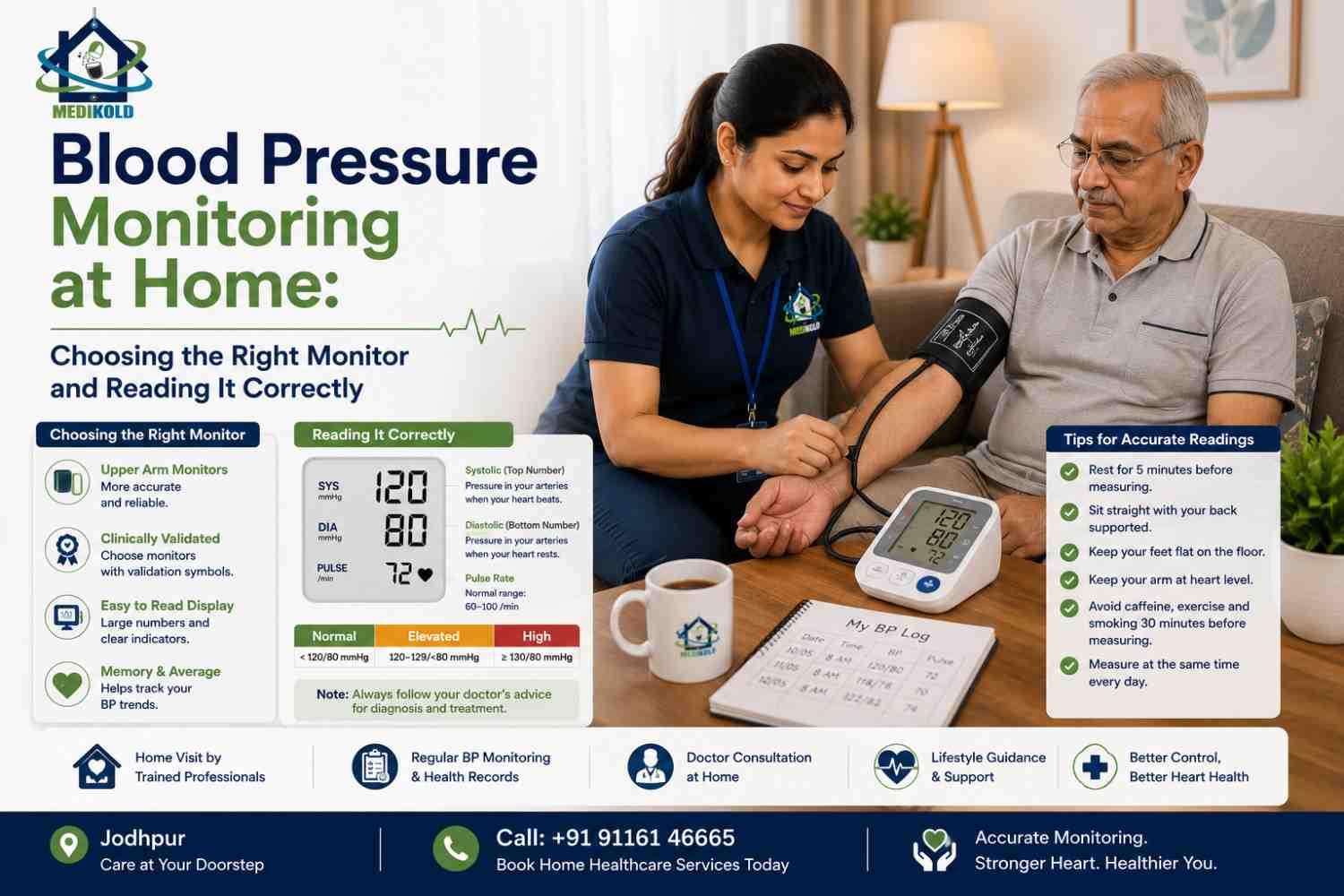
A home blood pressure monitor is only as useful as the technique behind it. Here's how to choose the right device and use it in a way your doctor can actually trust.
Home blood pressure monitoring has become an increasingly important tool for managing hypertension and catching early changes between clinic visits, but its value depends entirely on two things most people never think carefully about: whether the monitor itself is accurate, and whether it's being used correctly. A perfectly good monitor used incorrectly can produce numbers that mislead rather than inform.
Upper-arm monitors are generally considered more accurate and more consistently reliable than wrist monitors, which are more sensitive to arm position and tend to produce more variable readings. For anyone managing hypertension seriously, an upper-arm monitor, such as our validated blood pressure monitor, is the more dependable choice.
Reputable monitors are validated against clinical standards by recognised medical bodies. This information is usually available in the product specifications, and it's worth checking before purchasing rather than assuming all monitors are equally accurate, since accuracy can genuinely vary between devices.
A cuff that's too small for your arm circumference will produce falsely high readings, and one that's too large can produce falsely low readings. Most monitors come with a standard cuff, but larger or smaller cuff sizes are available and worth using if your arm circumference falls outside the standard range.
Avoid caffeine, exercise, and smoking for 30 minutes beforehand. Empty your bladder. Sit quietly for five minutes before taking the reading, since jumping straight from activity to measurement is one of the most common sources of inaccurate readings.
Sit with your back supported, feet flat on the floor (not crossed), and your arm resting on a table at roughly heart level. The cuff should sit directly on bare skin, not over clothing, which can affect the reading.
Take two readings, one minute apart, and record the average rather than relying on a single measurement, which can be affected by momentary factors that don't reflect your typical blood pressure.
Measuring at similar times of day, morning and evening are commonly recommended, gives more meaningful trend data than measuring at random, inconsistent times.
A simple log noting the date, time, and reading, along with any relevant context (recent stress, poor sleep, a missed medication dose), gives your physician a considerably more complete picture than the single reading captured during an occasional clinic visit, which can be affected by "white coat" anxiety in either direction.
A single unusually high or low reading isn't necessarily cause for alarm, home monitors do occasionally produce outlier readings, but a reading above roughly 180/120 mmHg, particularly with symptoms like severe headache, chest pain, or vision changes, warrants urgent medical attention. Persistently elevated readings over several days, even without symptoms, are worth discussing with your physician rather than waiting for your next scheduled visit.
For patients managing hypertension who want additional support, whether that's help establishing a reliable monitoring routine, interpreting trends, or in-home physician review, our home healthcare team in Jodhpur can help build monitoring into a broader, well-coordinated care plan rather than leaving it as an isolated task.
Beyond the core technique already covered, a few less obvious habits quietly distort readings for many people. Talking or checking a phone during measurement can meaningfully raise the reading, so it's worth staying quiet and still for the full duration. A full bladder can raise systolic pressure by a small but real amount, which is why it's worth emptying it beforehand rather than treating this step as optional. Measuring immediately after waking, before getting out of bed and moving around, tends to give a different, often lower, reading than measuring after the morning routine has begun, so consistency in exactly when you measure each day matters more than most people realise for producing a genuinely comparable trend over time.
Many modern monitors sync readings to a phone app automatically, which can be genuinely useful, but a simple written log works just as well and is sometimes easier for a physician to scan quickly during a short consultation. Whichever method you use, bringing at least two to four weeks of consistent readings to a review, rather than a handful of scattered measurements, gives your physician meaningfully more to work with when deciding whether your current treatment plan is achieving its goal.
Get Home Blood Pressure Support
Yes, blood pressure can be modestly affected by temperature extremes, which is worth keeping in mind if readings seem unusually different during a heatwave or cold snap.
Waiting at least 30 minutes after smoking, similar to the guidance for caffeine, helps ensure the reading reflects your resting blood pressure rather than a temporary nicotine-related spike.
Yes, targets can be adjusted for older adults or those with certain other health conditions, which is why individualised guidance from your physician matters more than applying a single generic target to everyone.
Chronic stress can contribute to elevated blood pressure over time, which is different from the temporary spike caused by acute situational anxiety, and both are worth discussing with your physician if readings are consistently high.
Upper-arm monitors are generally more accurate and consistent. Wrist monitors can be used if upper-arm isn't practical, but readings should be interpreted with some caution given their greater sensitivity to positioning.
For most people managing hypertension, once or twice daily (morning and evening) provides useful trend data, though your physician can advise on frequency based on your specific situation.
Yes, this is a recognised phenomenon, and it's part of why sitting quietly for five minutes before measuring and taking two readings, averaged, helps produce a more representative result.
Using the same arm consistently makes tracking trends over time more meaningful, though it's reasonable to occasionally check both arms, since a significant persistent difference between arms is itself worth mentioning to your doctor.
Periodic comparison against a clinic reading, ideally taken around the same time, is a reasonable way to check your home monitor remains accurate, particularly if it's a few years old.
No, it complements clinic care by providing more data between visits, but regular physician review remains important for interpreting trends and adjusting treatment as needed.
This article is for educational purposes and does not replace personalized medical advice. Please consult a qualified physician before making changes to your treatment, medication, or health screening plan.
घर पर palliative care का अर्थ, किन मरीजों को जरूरत हो सकती है और परिवार सुरक्षित योजना कैसे बनाए।
कमजोर मरीज को बेड से व्हीलचेयर पर ले जाते समय क्षमता, ब्रेक, चक्कर और प्रशिक्षित सहायता कैसे जांचें।
घर पर oxygen कब जरूरी होती है, pulse oximeter reading कैसे समझें, और किन लक्षणों पर hospital जाना चाहिए।
Upper-arm monitors are generally considered more accurate and more consistently reliable than wrist monitors, which are more sensitive to arm position and tend to produce more variable readings. For anyone managing hypertension seriously, an upper-arm monitor, such as our validated blood pressure monitor , is the more dependable choice.
Reputable monitors are validated against clinical standards by recognised medical bodies. This information is usually available in the product specifications, and it's worth checking before purchasing rather than assuming all monitors are equally accurate, since accuracy can genuinely vary between devices.
A cuff that's too small for your arm circumference will produce falsely high readings, and one that's too large can produce falsely low readings. Most monitors come with a standard cuff, but larger or smaller cuff sizes are available and worth using if your arm circumference falls outside the standard range.
Avoid caffeine, exercise, and smoking for 30 minutes beforehand. Empty your bladder. Sit quietly for five minutes before taking the reading, since jumping straight from activity to measurement is one of the most common sources of inaccurate readings.
Sit with your back supported, feet flat on the floor (not crossed), and your arm resting on a table at roughly heart level. The cuff should sit directly on bare skin, not over clothing, which can affect the reading.
Take two readings, one minute apart, and record the average rather than relying on a single measurement, which can be affected by momentary factors that don't reflect your typical blood pressure.
Measuring at similar times of day, morning and evening are commonly recommended, gives more meaningful trend data than measuring at random, inconsistent times.
Yes, blood pressure can be modestly affected by temperature extremes, which is worth keeping in mind if readings seem unusually different during a heatwave or cold snap.
Waiting at least 30 minutes after smoking, similar to the guidance for caffeine, helps ensure the reading reflects your resting blood pressure rather than a temporary nicotine-related spike.
Yes, targets can be adjusted for older adults or those with certain other health conditions, which is why individualised guidance from your physician matters more than applying a single generic target to everyone.
Chronic stress can contribute to elevated blood pressure over time, which is different from the temporary spike caused by acute situational anxiety, and both are worth discussing with your physician if readings are consistently high.
Upper-arm monitors are generally more accurate and consistent. Wrist monitors can be used if upper-arm isn't practical, but readings should be interpreted with some caution given their greater sensitivity to positioning.
For most people managing hypertension, once or twice daily (morning and evening) provides useful trend data, though your physician can advise on frequency based on your specific situation.
Yes, this is a recognised phenomenon, and it's part of why sitting quietly for five minutes before measuring and taking two readings, averaged, helps produce a more representative result.
Using the same arm consistently makes tracking trends over time more meaningful, though it's reasonable to occasionally check both arms, since a significant persistent difference between arms is itself worth mentioning to your doctor.
Periodic comparison against a clinic reading, ideally taken around the same time, is a reasonable way to check your home monitor remains accurate, particularly if it's a few years old.
No, it complements clinic care by providing more data between visits, but regular physician review remains important for interpreting trends and adjusting treatment as needed.
Stay updated with our latest medical news, insights, and exclusive health tips delivered straight to your inbox.