Foley Catheter कितने दिन में बदलना चाहिए? Block हो जाए तो क्या करें?
Foley catheter change interval हर मरीज में अलग हो सकता है. जानें blockage के संकेत, safe troubleshooting और कब nurse या hospital से तुरंत संपर्क करना चाहिए.
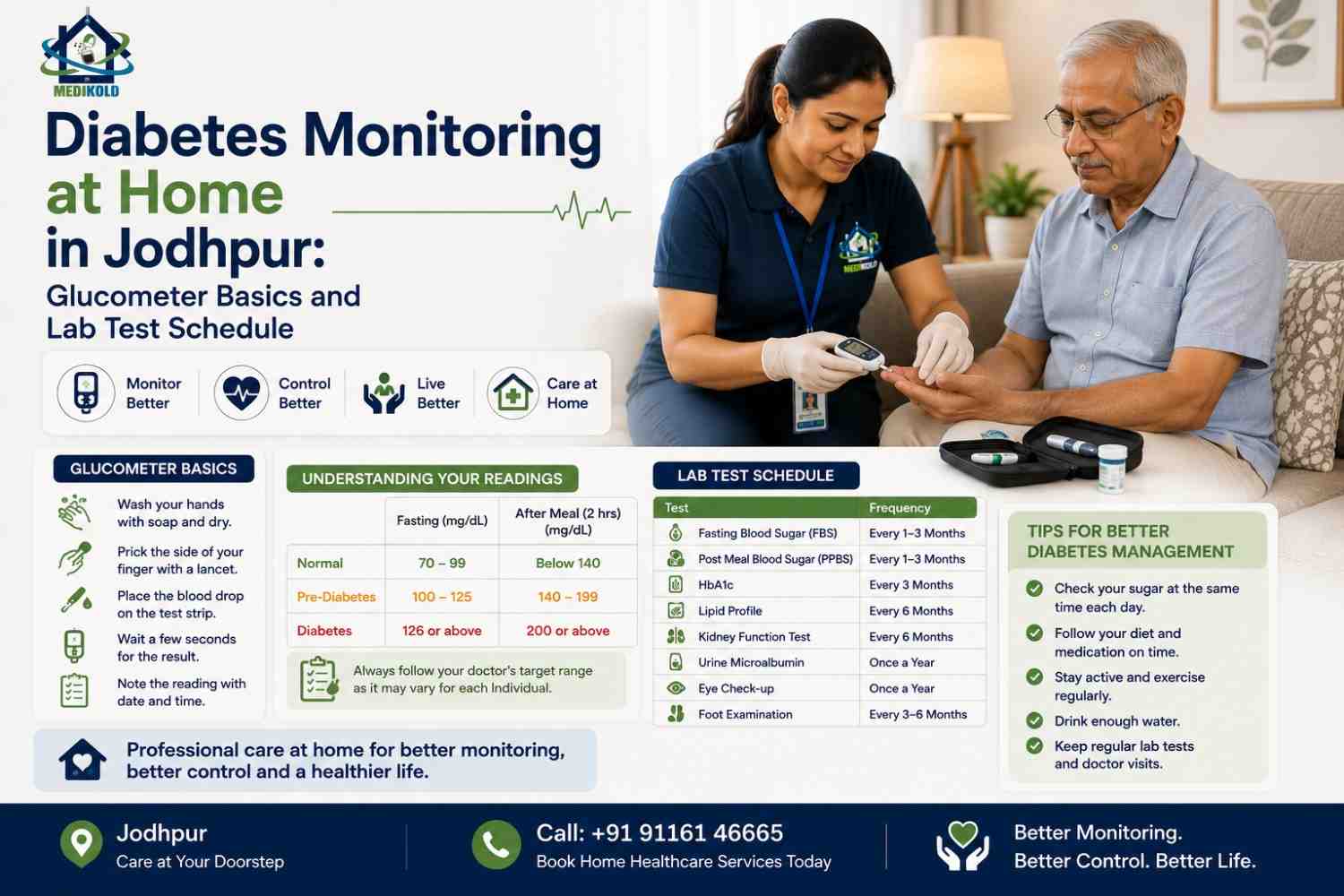
A glucometer alone doesn't tell the whole diabetes story. Here's how home monitoring and periodic lab testing work together for proper diabetes management.
Good, well-rounded diabetes management genuinely relies on two complementary types of monitoring working together: daily or periodic home glucose checks using a glucometer, which show moment-to-moment blood sugar, and periodic laboratory testing, particularly HbA1c, which shows the bigger three-month picture instead. Relying on only one gives a genuinely incomplete view of the overall picture, and understanding how the two work together in practice makes a meaningful, real difference to how well diabetes ends up actually being controlled over time.
Wash and dry hands thoroughly before testing, since residue, particularly from fruit or sugary foods, can produce a falsely high reading. Use a fresh lancet each time, and follow your specific glucometer's instructions for sample size and timing, since technique variations between devices can genuinely affect accuracy.
Your physician will typically recommend a specific testing schedule based on your treatment, fasting (before breakfast), before other meals, two hours after meals, and sometimes before bed, since the pattern across the day, not a single reading, is what guides treatment decisions.
General targets, which your physician may adjust for your individual situation, are often fasting glucose in the 80–130 mg/dL range and post-meal glucose below 180 mg/dL, though these targets vary by individual factors including age, other health conditions, and how long you've had diabetes.
HbA1c reflects your average blood glucose level over roughly the preceding three months, giving a picture that daily glucometer readings, however frequent and however carefully taken, simply can't fully capture on their own, since it smooths out day-to-day variation into one single, genuinely meaningful trend number worth tracking. Most physicians recommend HbA1c testing every three to six months, more frequently if treatment has recently changed or control has been unstable, available through blood testing services in Jodhpur without needing a hospital visit purely for this purpose.
Accuracy, ease of use, and the availability of affordable test strips are the main practical considerations. Our glucometer kit is designed for reliable home use, and it's worth choosing a device with consistent, ongoing strip availability rather than one that becomes difficult to source refills for later.
Well-managed diabetes involves monitoring beyond glucose alone: periodic kidney function testing, since diabetes is a leading cause of kidney disease if not well controlled; an annual eye examination, given the risk of diabetic retinopathy; regular foot checks, since diabetes can affect circulation and nerve sensation in the feet; and blood pressure and cholesterol monitoring, since cardiovascular risk is significantly elevated in diabetes and often needs managing alongside glucose itself.
For many patients, particularly those managing diabetes alongside other existing health conditions or with genuine mobility limitations, coordinating regular glucometer use, scheduled periodic lab tests, and ongoing physician review together can understandably feel like a great deal to organise entirely independently. Our home lab testing service combined with physician home visits brings this full picture together without requiring repeated trips out for each individual component of care.
Beyond routine tracking, it's worth knowing the signs of a genuine glucose emergency. A low blood sugar episode (hypoglycemia), typically below 70 mg/dL, can cause shakiness, sweating, confusion, or in severe cases loss of consciousness, and needs prompt treatment with fast-acting sugar followed by a more sustained carbohydrate source. A significantly high reading, particularly above 300 mg/dL, especially alongside symptoms like excessive thirst, frequent urination, or nausea, also warrants prompt attention rather than simply waiting for the next scheduled dose of medication. Having a clear, written action plan for both scenarios, agreed with your physician in advance, removes guesswork during a moment when clear thinking is genuinely harder.
Blood sugar control often becomes less predictable during illness, travel, or significant changes in routine, exactly the periods when consistent monitoring matters most but is easiest to let slip. More frequent glucometer checks during these periods, along with keeping supplies and medication accessible rather than packed away, helps catch and correct problems before they escalate into something requiring hospital attention.
Set Up Home Diabetes Monitoring
Yes, with age-appropriate adjustments and closer parental involvement, the same core principles of consistent glucometer use and periodic lab testing apply to children managing diabetes.
Minor variation can occur, but significant differences are usually more related to technique or hand cleanliness than the specific finger used.
This varies by brand, typically a few months, and is specified on the packaging, so checking and respecting this window matters for reading accuracy.
Yes, a comprehensive home blood draw can typically include kidney function, lipid profile, and other relevant markers alongside HbA1c in a single visit.
Yes, both physical illness and significant stress can raise blood sugar independent of food intake, which is why context, not just the number itself, matters when interpreting an unexpected reading.
Yes, strips should be kept in their original container, away from heat and humidity, and used before their expiry date, since improperly stored strips can produce inaccurate readings.
This depends on your specific treatment and control; your physician will recommend a schedule, which might range from once daily to several times a day, particularly if you're on insulin.
HbA1c is typically a lab-based blood test, but home sample collection is available through home lab testing services, avoiding the need for a hospital or lab visit purely for this test.
Blood sugar naturally rises after eating, so post-meal targets are set higher than fasting targets, reflecting the body's normal glucose response to food rather than indicating a separate problem.
Yes, HbA1c gives an average but doesn't show day-to-day patterns or catch episodes of low blood sugar, both of which home monitoring can reveal and which matter for fine-tuning treatment.
Check technique first, hand cleanliness, fresh lancets, correct sample size, and consider comparing against a lab result. Persistent inconsistency is worth discussing with your physician or the device manufacturer.
Yes, kidney function, eye health, foot checks, blood pressure, and cholesterol are all part of comprehensive diabetes management, not just glucose control alone.
This article is for educational purposes and does not replace personalized medical advice. Please consult a qualified physician before making changes to your treatment, medication, or health screening plan.
Foley catheter change interval हर मरीज में अलग हो सकता है. जानें blockage के संकेत, safe troubleshooting और कब nurse या hospital से तुरंत संपर्क करना चाहिए.
घर पर urine catheter की hygiene, drainage bag position, blockage checks और infection के warning signs की practical caregiver guide।
जानें घर पर IV drip या saline कब सुरक्षित हो सकती है, किन मरीजों को hospital जाना चाहिए और treatment के दौरान कौन से warning signs देखें।
Wash and dry hands thoroughly before testing, since residue, particularly from fruit or sugary foods, can produce a falsely high reading. Use a fresh lancet each time, and follow your specific glucometer's instructions for sample size and timing, since technique variations between devices can genuinely affect accuracy.
Your physician will typically recommend a specific testing schedule based on your treatment, fasting (before breakfast), before other meals, two hours after meals, and sometimes before bed, since the pattern across the day, not a single reading, is what guides treatment decisions.
General targets, which your physician may adjust for your individual situation, are often fasting glucose in the 80–130 mg/dL range and post-meal glucose below 180 mg/dL, though these targets vary by individual factors including age, other health conditions, and how long you've had diabetes.
Yes, with age-appropriate adjustments and closer parental involvement, the same core principles of consistent glucometer use and periodic lab testing apply to children managing diabetes.
Minor variation can occur, but significant differences are usually more related to technique or hand cleanliness than the specific finger used.
This varies by brand, typically a few months, and is specified on the packaging, so checking and respecting this window matters for reading accuracy.
Yes, a comprehensive home blood draw can typically include kidney function, lipid profile, and other relevant markers alongside HbA1c in a single visit.
Yes, both physical illness and significant stress can raise blood sugar independent of food intake, which is why context, not just the number itself, matters when interpreting an unexpected reading.
Yes, strips should be kept in their original container, away from heat and humidity, and used before their expiry date, since improperly stored strips can produce inaccurate readings.
This depends on your specific treatment and control; your physician will recommend a schedule, which might range from once daily to several times a day, particularly if you're on insulin.
HbA1c is typically a lab-based blood test, but home sample collection is available through home lab testing services, avoiding the need for a hospital or lab visit purely for this test.
Blood sugar naturally rises after eating, so post-meal targets are set higher than fasting targets, reflecting the body's normal glucose response to food rather than indicating a separate problem.
Yes, HbA1c gives an average but doesn't show day-to-day patterns or catch episodes of low blood sugar, both of which home monitoring can reveal and which matter for fine-tuning treatment.
Check technique first, hand cleanliness, fresh lancets, correct sample size, and consider comparing against a lab result. Persistent inconsistency is worth discussing with your physician or the device manufacturer.
Yes, kidney function, eye health, foot checks, blood pressure, and cholesterol are all part of comprehensive diabetes management, not just glucose control alone.
Stay updated with our latest medical news, insights, and exclusive health tips delivered straight to your inbox.