Urine Catheter की घर पर देखभाल कैसे करें? Infection के संकेत क्या हैं?
घर पर urine catheter की hygiene, drainage bag position, blockage checks और infection के warning signs की practical caregiver guide।
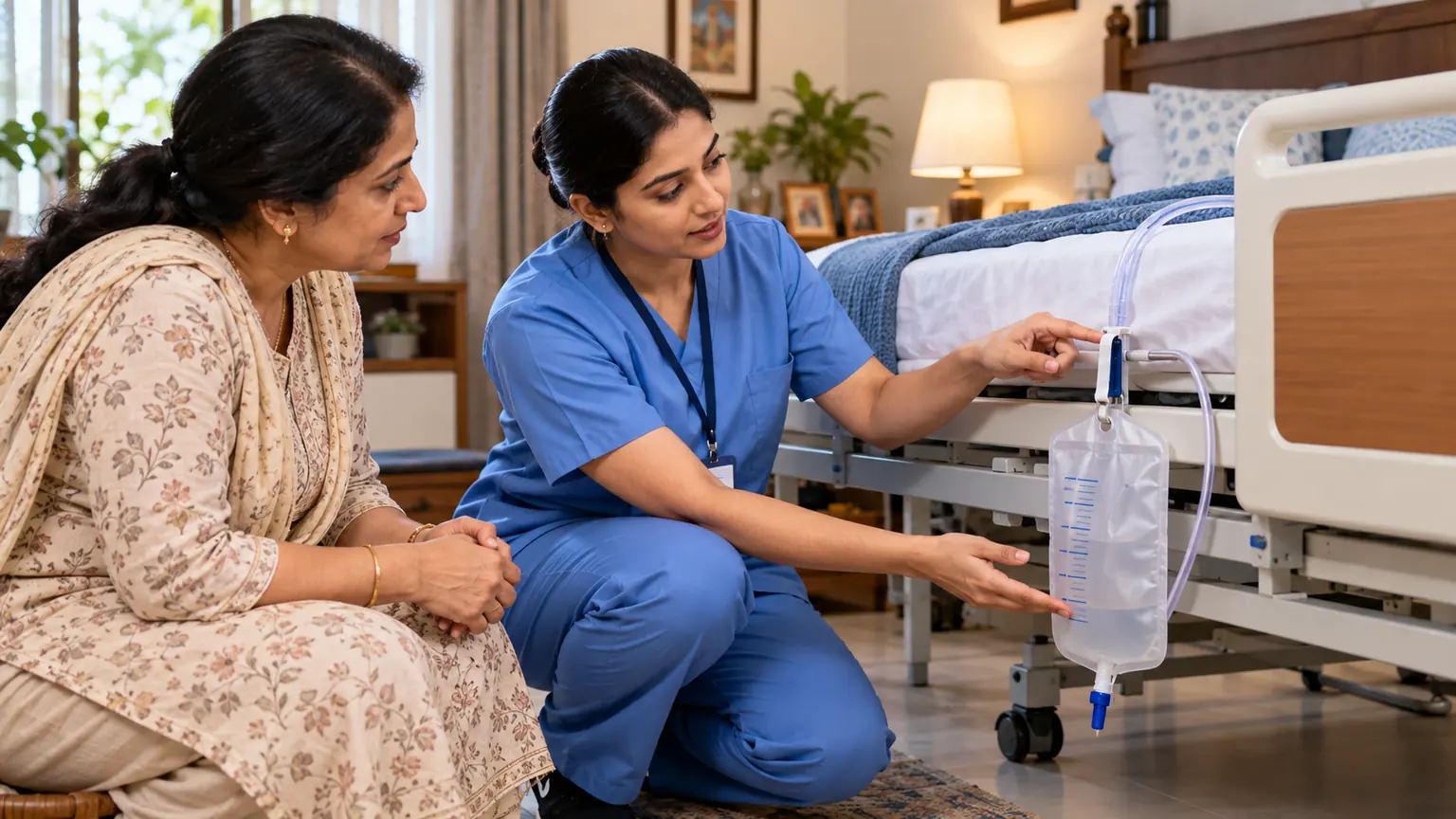
Foley catheter change interval हर मरीज में अलग हो सकता है. जानें blockage के संकेत, safe troubleshooting और कब nurse या hospital से तुरंत संपर्क करना चाहिए.
घर पर Foley catheter लगा होने पर caregiver का सबसे common सवाल होता है कि इसे कितने दिन में बदलना चाहिए. इसका एक universal answer नहीं है. Catheter का material, patient की medical condition, urine में बार-बार debris या encrustation, infection का risk, leakage, blockage और treating doctor का plan interval तय करते हैं. केवल calendar देखकर catheter बदलना हर patient के लिए सही approach नहीं है.
US CDC की catheter-associated urinary tract infection guidance routine fixed interval पर catheter और drainage bag बदलने की सलाह नहीं देती. Change clinical indication पर किया जाता है, जैसे infection, obstruction या closed system का compromise होना. लेकिन local protocol, manufacturer guidance और treating clinician का निर्देश भी follow करना जरूरी है. Catheter बदलना trained nurse या qualified healthcare professional का काम है. Caregiver को घर पर खुद catheter निकालने, नया डालने या blockage flush करने की कोशिश नहीं करनी चाहिए जब तक उसे specifically trained और authorised न किया गया हो.
Foley catheter एक flexible tube है जो urethra के रास्ते bladder में जाती है. इसके सिरे पर छोटा balloon sterile water से inflate किया जाता है, जिससे tube अपनी जगह बनी रहती है. Urine tube से drainage bag में आता है. इसका use urinary retention, surgery के बाद monitoring, severe immobility, कुछ neurological conditions या end-of-life comfort जैसे clinical reasons के लिए हो सकता है.
Catheter जितने समय तक लगा रहता है, infection और दूसरे complications का risk उतना बढ़ सकता है. इसलिए पहला सवाल केवल “कब बदलें” नहीं होना चाहिए. यह भी पूछना चाहिए कि क्या catheter अभी भी medically required है. Removal का निर्णय treating team करती है.
इसलिए internet पर “हर 15 दिन” या “हर 30 दिन” जैसा fixed rule follow करना unsafe हो सकता है. Discharge summary में अगली planned change date लिखवाएं और follow-up team का phone number रखें.
Blockage का सबसे obvious sign bag में urine आना बंद होना है, लेकिन पहले simple causes check करने चाहिए. Tube kink हो सकती है, patient tube पर लेटा हो सकता है, bag bladder से ऊपर हो सकता है, या connection दबा हुआ हो सकता है. दूसरे संकेत हैं:
Leakage हमेशा blockage नहीं होता. Bladder spasm, constipation, wrong catheter size, infection या tube traction भी कारण हो सकते हैं. Diagnosis trained professional को करना चाहिए.
Tube को जोर से squeeze, milk या pull न करें. Catheter में tap water, antiseptic, oil या unprescribed solution न डालें. Balloon port को touch न करें. बिना आदेश catheter flush करना trauma, infection या bladder injury का कारण बन सकता है.
Urine drainage बंद होने के साथ lower abdominal pain या bladder swelling हो तो prompt clinical help लें. Fever, chills, नया confusion, vomiting, severe back or side pain, heavy bleeding, large clots, catheter बाहर आ जाना, या recent urological surgery के बाद blockage urgent review की जरूरत हो सकती है.
Severe breathlessness, fainting, very low alertness या rapidly worsening condition में emergency service का उपयोग करें. Home care hospital-level emergency treatment का substitute नहीं है.
Long-term catheter वाले patients में urine cloudy दिख सकता है या bacteria मौजूद हो सकते हैं, लेकिन केवल smell या cloudiness infection prove नहीं करते. Symptomatic infection में fever, suprapubic pain, flank pain, rigors, new confusion या systemic illness जैसे features हो सकते हैं. Antibiotics preventive तरीके से routinely लेना सही नहीं है, और leftover antibiotics use नहीं करनी चाहिए.
हमारा related guide घर पर urine catheter care और infection के संकेत daily hygiene, bag handling और warning signs को detail में समझाता है. English resource के लिए urinary catheter care at home पढ़ सकते हैं.
Change से पहले nurse को indication, catheter type and size, balloon volume, allergies, previous difficult insertion, urethral surgery, bleeding, and infection history पता होना चाहिए. Sterile or aseptic technique और correct equipment infection और trauma risk कम करने के लिए important हैं.
Repeated difficult catheterisation, severe pain, resistance, bleeding, suspected false passage, or known urethral stricture में force नहीं लगाना चाहिए. Urology review की जरूरत हो सकती है. Suprapubic catheter के शुरुआती weeks में accidental removal particularly urgent हो सकता है क्योंकि tract जल्दी close हो सकता है.
Bedridden, elderly, neurologically impaired, postoperative या long-term catheter वाले patients में trained home nurse assessment, catheter change when prescribed, hygiene education, output monitoring और escalation में मदद कर सकती है. Nurse और caregiver की roles अलग होती हैं. Clinical procedure trained professional करे, जबकि caregiver positioning, bag placement, observation और timely reporting में support दे.
यदि patient को wound care भी चाहिए, तो dressing and wound care at home के basic principles पढ़ें. अलग procedures के लिए अलग sterile supplies और infection-control steps जरूरी होते हैं.
हर patient के लिए fixed monthly rule नहीं है. Clinical indication, catheter material, manufacturer guidance और treating team's plan follow करें.
नहीं. Kink और bag position check करें, लेकिन catheter खुद न निकालें. Pain, bladder fullness या continued no drainage में professional help लें.
केवल trained professional specific clinical order और appropriate sterile technique के साथ irrigation करे. Untrained flushing injury और infection कर सकता है.
Blockage, bladder spasm, constipation, traction, infection या sizing issue कारण हो सकते हैं. Recurrent leakage का assessment जरूरी है.
अकेली smell infection confirm नहीं करती. Symptoms, examination और जरूरत पर tests के आधार पर clinician diagnosis करता है.
उसे वापस डालने की कोशिश न करें. Treating team से तुरंत contact करें, विशेषकर suprapubic catheter या recent surgery में.
Medical note: यह article general education के लिए है. Catheter insertion, change, flushing और treatment qualified healthcare professional के निर्देश में ही होना चाहिए.
घर पर urine catheter की hygiene, drainage bag position, blockage checks और infection के warning signs की practical caregiver guide।
जानें घर पर IV drip या saline कब सुरक्षित हो सकती है, किन मरीजों को hospital जाना चाहिए और treatment के दौरान कौन से warning signs देखें।
A family guide to urinary catheter care at home in Jodhpur, including hygiene, drainage bag safety, warning signs, and when a trained nurse is needed.
Stay updated with our latest medical news, insights, and exclusive health tips delivered straight to your inbox.