घर पर Palliative Care क्या है और कब जरूरत होती है?
घर पर palliative care का अर्थ, किन मरीजों को जरूरत हो सकती है और परिवार सुरक्षित योजना कैसे बनाए।
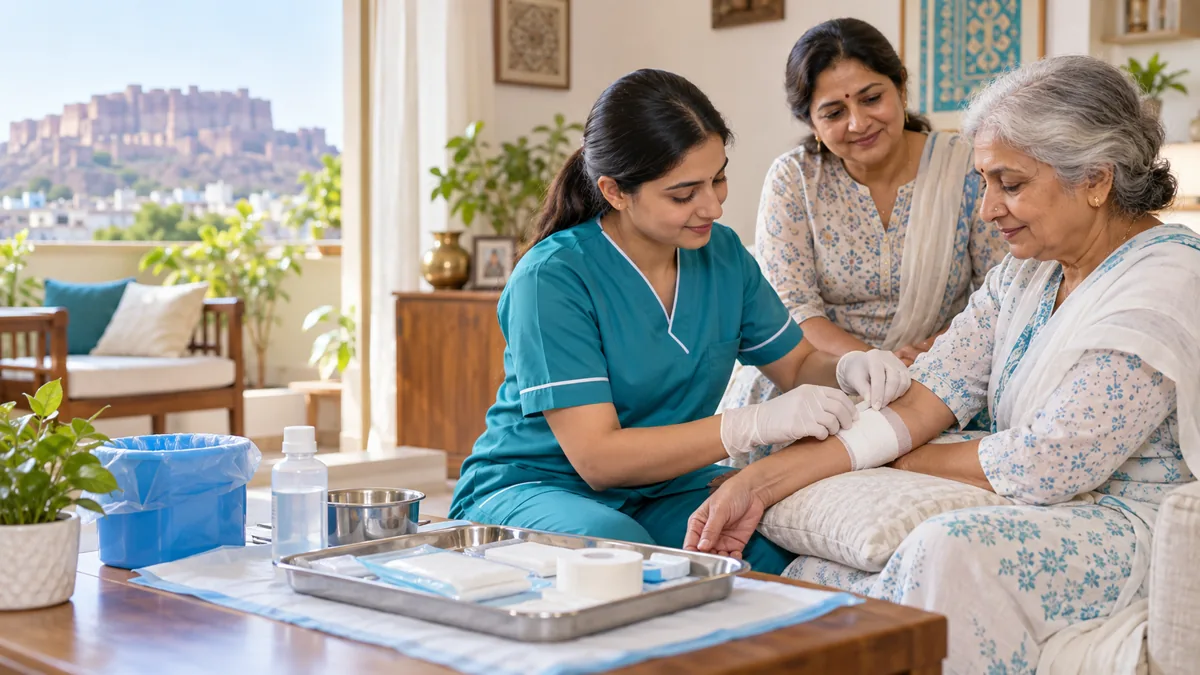
A practical guide to safe dressing and wound care at home, including clean technique, infection warning signs, diabetes precautions, and when to call a professional.
A wound may look small, but the way it is cleaned, covered, monitored, and protected can influence comfort, infection risk, and recovery. Dressing and wound care at home can be appropriate for many surgical wounds, pressure injuries, diabetic wounds, minor cuts, and slow-healing ulcers. The important point is that home care should follow a plan made for the specific wound. A dressing that is suitable for one person may be unsuitable for another.
This guide explains how families can prepare for safe wound care at home, what a professional nurse assesses, which warning signs need medical attention, and how to support healing between dressing visits. It is general education, not a substitute for an examination or the instructions given by your surgeon, physician, or wound-care nurse.
Home wound care is more than replacing a piece of gauze. It begins with identifying the type of wound, understanding why it occurred, checking factors that could delay healing, and choosing a dressing that protects the tissue while managing moisture and drainage. The care plan may include cleaning, applying a prescribed product, covering the wound, protecting the surrounding skin, controlling pressure, documenting progress, and arranging clinical review.
A trained home-care nurse may also check temperature, pulse, pain, blood glucose when relevant, swelling, circulation, mobility, nutrition, and the patient's ability to manage medicines. These details matter because a wound is part of a whole person. Poor circulation, uncontrolled diabetes, infection, repeated friction, prolonged pressure, smoking, low protein intake, and some medicines can all affect recovery.
If you need nursing support in Jodhpur, read MediKold's guide to home nursing services in Jodhpur or explore available home-care services.
A clinician may recommend home dressing for several situations:
Wounds caused by animal or human bites, dirty punctures, chemicals, electricity, major trauma, or objects still embedded in the skin need medical assessment. The clinician may also review tetanus protection.
A suitable dressing protects the wound from contamination, absorbs excess fluid, reduces friction, and supports an environment in which healing tissue can develop. Modern dressings vary widely. Some absorb heavy drainage, some add moisture to a dry wound, some protect fragile skin, and some contain antimicrobial materials for selected clinical situations.
There is no single best dressing for every wound. Using a product because it worked for a relative can cause problems if the current wound has different depth, drainage, circulation, infection risk, or surrounding skin condition. Frequent unnecessary changes may disturb new tissue, while leaving a saturated or loose dressing in place can expose the wound to leakage and contamination. Follow the schedule and product selection provided by the treating clinician.
Before a dressing change, choose a clean, well-lit surface away from cooking, pets, open windows, and household clutter. Keep children and visitors away during the procedure. Gather all prescribed supplies before starting so the person doing the dressing does not need to move between clean and unclean areas.
A typical supply set may include the prescribed dressing, clean or sterile gauze as instructed, normal saline or another clinician-approved cleanser, gloves, adhesive or bandage, a clean underpad, hand-cleaning supplies, and a leak-proof waste bag. Do not substitute cotton wool, tissue, household cloth, talcum powder, toothpaste, ghee, turmeric, herbal paste, or an unprescribed cream. Fibres and household remedies may contaminate or irritate a wound and can make assessment more difficult.
Hand hygiene is one of the most important safety steps. The World Health Organization guidance for home-based care applies hand hygiene principles to wound dressing in the home. Hands should be cleaned before preparing supplies, after removing the old dressing, before touching the clean dressing, and after waste is handled. Gloves do not replace hand cleaning.
The exact technique depends on the wound and the instructions provided by the healthcare team. A general sequence is:
Never probe a wound, cut dead tissue, remove stitches or staples, pack a cavity, or apply compression unless a trained clinician has instructed and demonstrated the procedure. Complex wounds often require a nurse because depth, tunnels, tissue type, circulation, and infection cannot be judged reliably from a quick look.
The answer depends on the wound and product. Some dressings are changed daily, while others are designed to stay in place for several days. A post-operative dressing may be left undisturbed for the period advised by the surgical team if it remains dry and sealed. The Guy's and St Thomas' NHS home surgical wound guide notes that a dressing should be replaced if it becomes loose, unsealed, soaked, or if staining reaches its edges, but individual instructions still take priority.
Changing too often can irritate skin and disturb the healing surface. Waiting too long when the dressing is saturated can allow leakage and damage the surrounding skin. Ask the nurse to write down the expected schedule and what should trigger an earlier change.
Some redness, tenderness, or drainage may be expected with certain wounds, but worsening changes require attention. Contact the treating doctor or nurse promptly if you notice:
The CDC lists redness and pain around a surgical area, cloudy drainage, and fever among signs of a surgical site infection. Infection may need antibiotics or another procedure, so do not self-start leftover antibiotics or delay review.
Go to the nearest emergency department or seek urgent medical help for bleeding that does not stop with firm pressure, a deep or gaping wound, visible deeper structures, loss of sensation or movement, a pale or cold limb, severe rapidly worsening pain, extensive burns, chemical or electrical injuries, breathing difficulty, fainting, confusion, or signs of severe infection.
A diabetic foot wound needs particular caution. Seek timely medical assessment for any new break in the skin, blister, colour change, swelling, warmth, discharge, or black tissue, even when pain is mild. Reduced sensation can hide the seriousness of an injury. Families managing diabetes can also review MediKold's diabetes care at home guide.
A pressure wound cannot heal well if the same area remains under pressure. The care plan may include regular position changes, heel protection, an appropriate mattress or cushion, moisture management, safe transfers, and a mobility plan. Do not massage reddened skin over a bony area. Check vulnerable areas daily, especially the heels, ankles, hips, tailbone, elbows, shoulders, and back of the head.
Skin that stays red or discoloured after pressure is relieved, a blister, or an open area should be assessed early. Read the caregiver guide to preventing bedsores at home for practical pressure-relief measures.
Dressing is only one part of recovery. Healing requires adequate energy, protein, fluids, vitamins, minerals, oxygen delivery, and blood flow. Offer balanced meals with suitable protein sources unless the doctor or dietitian has imposed restrictions for kidney, liver, or another condition. Dehydration and poor intake should be discussed with the care team.
For a person with diabetes, follow the prescribed glucose-monitoring and medicine plan. Persistent high blood glucose can impair healing and increase infection risk. Smoking and tobacco use reduce oxygen delivery and should be addressed with professional cessation support. Swelling, anaemia, vascular disease, and medicine side effects may also need medical management.
Use one page or a secure phone note for each wound. Record the dressing date and time, who performed it, pain before and after, drainage amount and colour, odour after cleaning, surrounding redness or swelling, temperature if the person feels unwell, and the next planned review. Photos can help clinicians compare progress, but take them only with the patient's consent and share them through a secure channel approved by the care provider.
Do not rely only on a photograph. Lighting and angle can hide depth, heat, tenderness, odour, circulation problems, and changes beneath the skin. A wound that is not improving as expected should be examined in person.
A nurse-led visit is particularly valuable when the wound is deep, heavily draining, painful, difficult to reach, near a joint, associated with diabetes or poor circulation, or requires packing, specialised dressings, or pressure-injury management. Professional care can also help an older adult who lives alone, a person with limited mobility, or a family caregiver who has not been trained in clean dressing technique.
During a visit, the nurse can measure the wound, assess the tissue and surrounding skin, check for infection or circulation concerns, perform the ordered dressing, document progress, teach the family, and escalate findings to a doctor. When symptoms suggest a wider problem, a doctor home visit may be useful, although emergencies still require hospital care.
No. Minor or stable wounds may be suitable for home care after clinical guidance. Deep, contaminated, gaping, infected, bite-related, puncture, diabetic foot, circulation-related, extensive burn, or rapidly worsening wounds need professional assessment. Emergency warning signs require urgent hospital care.
Do not use them routinely unless the treating clinician specifically advises it for that wound. Some strong antiseptics can irritate healing tissue. Use only the cleanser and method in the wound-care plan, commonly normal saline or another clinician-approved solution.
There is no universal schedule. Frequency depends on the wound, drainage, dressing product, and treatment goal. Follow the written plan and change earlier if the dressing becomes saturated, loose, contaminated, or unsealed, unless your clinical team has given different instructions.
Mild discomfort may occur, but severe or increasing pain is not something to ignore. Tell the nurse or doctor. The dressing may be sticking, the surrounding skin may be damaged, or infection, swelling, or reduced circulation may be contributing.
A diabetic foot wound should first be assessed promptly by a qualified clinician. Loss of sensation and reduced circulation can allow a serious problem to progress with little pain. Home dressing may form part of the plan, but it should not replace medical review, pressure relief, glucose management, and foot assessment.
Ask the treating team because products differ. A water-resistant dressing may tolerate a brief shower, but soaking in a bath can loosen the seal and expose the wound. Replace a wet or unsealed dressing according to the care plan.
Do not pull it off forcefully. Contact the nurse for product-specific advice. Some dressings may be loosened with saline, while others have a defined removal method. Forceful removal can cause pain, bleeding, and tissue damage.
Keep the discharge summary, prescription, dressing instructions, medicine list, and recent reports ready. Note the wound type, location, procedure date, drainage, medical conditions, and any warning signs. You can then request a MediKold appointment so the team can guide you to an appropriate home-care or medical service.
Good wound care combines the correct dressing with clean technique, pressure protection, symptom monitoring, nutrition, glucose control when relevant, and timely medical review. Families should not have to guess which product to use or whether a change is normal. A clear written plan and access to a trained professional make home recovery safer and more manageable.
If a wound is new, worsening, not healing as expected, or associated with diabetes, poor circulation, fever, severe pain, or spreading redness, arrange clinical assessment promptly. For planned care in Jodhpur, use the MediKold appointment page to start the conversation.
Medical disclaimer: This article provides general health information and does not diagnose or treat any condition. Follow the instructions of your treating clinician. Seek urgent medical care for severe symptoms or rapidly worsening wounds.
घर पर palliative care का अर्थ, किन मरीजों को जरूरत हो सकती है और परिवार सुरक्षित योजना कैसे बनाए।
कमजोर मरीज को बेड से व्हीलचेयर पर ले जाते समय क्षमता, ब्रेक, चक्कर और प्रशिक्षित सहायता कैसे जांचें।
घर पर oxygen कब जरूरी होती है, pulse oximeter reading कैसे समझें, और किन लक्षणों पर hospital जाना चाहिए।
Stay updated with our latest medical news, insights, and exclusive health tips delivered straight to your inbox.