घर पर IV Drip या Saline कब लगाई जा सकती है? किन मरीजों को Hospital जाना चाहिए?
जानें घर पर IV drip या saline कब सुरक्षित हो सकती है, किन मरीजों को hospital जाना चाहिए और treatment के दौरान कौन से warning signs देखें।
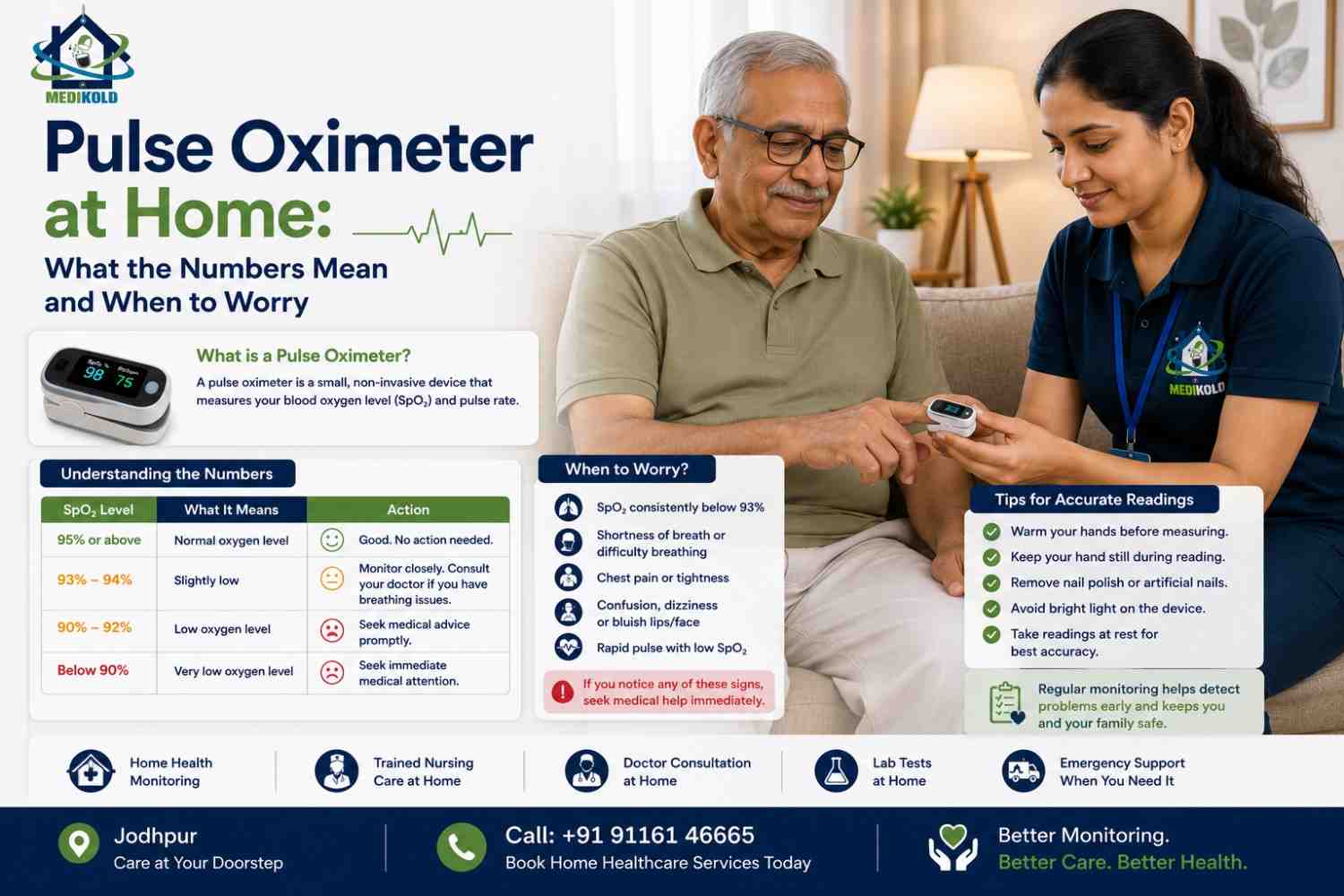
A pulse oximeter clip and a number on a screen doesn't tell the whole story on its own. Here's what the readings actually mean and when they warrant real concern.
Pulse oximeters became a household item for many families, and while the device itself is simple to use, clipping onto a fingertip and displaying a number within seconds, interpreting what that number actually means, and when it warrants genuine concern, is less widely understood than the device's popularity might suggest.
A pulse oximeter measures two things: SpO2, an estimate of the percentage of oxygen-saturated hemoglobin in your blood, and pulse rate. It works by shining light through the fingertip and measuring how much is absorbed, which varies depending on blood oxygen levels. It's a genuinely useful, non-invasive screening tool, though it's an estimate, not a perfectly precise measurement, and it has some real limitations worth understanding.
95–100%: Generally considered normal for a healthy person at sea level or moderate altitude.
90–94%: Mildly low, worth monitoring closely and mentioning to a physician, particularly if it's a new finding or accompanied by symptoms.
Below 90%: Generally considered low enough to warrant prompt medical attention, particularly if accompanied by breathlessness, confusion, or chest discomfort.
It's worth noting that some healthy individuals, particularly at higher altitudes or with certain lung conditions, may have a baseline SpO2 slightly below the "normal" range without it indicating an acute problem, which is why knowing your own typical baseline, established when you're well, is more useful than comparing against a generic population number alone.
Poor circulation, cold fingers, or nail polish can all interfere with an accurate reading, producing a falsely low number that doesn't reflect your actual oxygen level. Warming the hand and trying a different finger is a reasonable first step if a reading seems unexpectedly low.
Keeping the hand still during measurement, for at least 30 seconds to a minute, produces a more reliable reading than checking while moving or talking.
A pulse oximeter is one data point, not a complete assessment. Someone can feel genuinely unwell with a "normal" reading, and conversely, an isolated low reading in someone who feels completely fine and has warm, well-perfused hands sometimes reflects a measurement error rather than a true drop in oxygen. Persistent or symptomatic low readings should always be taken seriously and discussed with a physician.
Patients with chronic lung conditions like COPD or asthma, for whom trend monitoring can help catch early flare-ups.
Patients recovering from respiratory illness, where monitoring supports safe home recovery.
Elderly patients with multiple health conditions, where oxygen levels can be a useful early indicator of developing illness.
Anyone under home care supervision, where regular monitoring is part of a broader, coordinated care plan rather than an isolated, unguided measurement.
Symptoms matter as much as, or more than, the number itself. Significant breathlessness, chest pain, bluish discoloration of lips or fingertips, or confusion warrant prompt medical attention regardless of what the oximeter reads, since these are clinical signs that shouldn't be dismissed based on a single device reading. Our pulse oximeter and broader home monitoring equipment are designed to support, not replace, this kind of clinical judgment, ideally used alongside guidance from a physician or home care nurse who can interpret readings in the context of your overall health. Our related article on home blood pressure monitoring covers similar principles worth applying here too, since both devices share the same core lesson: technique and context matter as much as the number on the screen.
For patients managing a chronic respiratory or cardiac condition, checking SpO2 at a consistent time each day, alongside noting how you're feeling and any symptoms present, builds a genuinely useful trend over time rather than a collection of disconnected snapshots. A gradual downward trend across several days, even if each individual reading stays technically within a broadly acceptable range, is often more clinically meaningful than a single reading in isolation, and is exactly the kind of pattern worth flagging to your physician or home care nurse rather than waiting for a number to cross an alarming threshold before acting.
For patients recovering from respiratory illness or managing conditions like COPD, a pulse oximeter works best as one component of a broader home monitoring plan, alongside regular physician check-ins, rather than as a standalone device families are left to interpret entirely on their own. Our home healthcare team can help establish exactly this kind of structured, physician-guided monitoring routine.
Get Home Health Monitoring Support
For most people this isn't necessary, though specific sleep-related breathing concerns may warrant specialised overnight monitoring guided by a physician rather than a standard fingertip device.
Some natural variation is normal, particularly with breathing, movement, or recent activity, but a consistently very high or very low pulse rate is worth mentioning to your physician.
Yes, higher altitudes naturally produce lower baseline oxygen saturation in healthy individuals, which is worth factoring in if travelling to or living in a higher-altitude location.
Yes, though normal ranges and appropriate device sizing should be confirmed with a pediatrician, since some devices are better suited to smaller fingers than others.
95-100% is generally considered normal for a healthy person, though individual baselines can vary slightly, which is why knowing your own typical reading when well is useful.
Yes, particularly dark colours, which can interfere with the light-based measurement and produce an inaccurate, often falsely low, reading.
A single unexpected low reading, especially with cold hands or during movement, is often a measurement issue rather than a true drop in oxygen. Repeating the measurement under better conditions is a reasonable first step, but persistent low readings should be discussed with a doctor.
No, it only measures oxygen saturation and pulse rate. Some respiratory problems don't immediately lower SpO2, which is why symptoms should always be taken seriously even with a normal reading.
This depends on individual circumstances and should be guided by your physician, but regular monitoring, sometimes daily, is common for patients with conditions like COPD to catch early changes.
Quality varies between devices, and a validated, medical-grade oximeter generally provides more reliable readings than very low-cost, unvalidated alternatives, which is worth considering for anyone relying on it for genuine health monitoring.
This article is for educational purposes and does not replace personalized medical advice. Please consult a qualified physician before making changes to your treatment, medication, or health screening plan.
जानें घर पर IV drip या saline कब सुरक्षित हो सकती है, किन मरीजों को hospital जाना चाहिए और treatment के दौरान कौन से warning signs देखें।
A family guide to urinary catheter care at home in Jodhpur, including hygiene, drainage bag safety, warning signs, and when a trained nurse is needed.
A practical guide to safe dressing and wound care at home, including clean technique, infection warning signs, diabetes precautions, and when to call a professional.
Poor circulation, cold fingers, or nail polish can all interfere with an accurate reading, producing a falsely low number that doesn't reflect your actual oxygen level. Warming the hand and trying a different finger is a reasonable first step if a reading seems unexpectedly low.
Keeping the hand still during measurement, for at least 30 seconds to a minute, produces a more reliable reading than checking while moving or talking.
A pulse oximeter is one data point, not a complete assessment. Someone can feel genuinely unwell with a "normal" reading, and conversely, an isolated low reading in someone who feels completely fine and has warm, well-perfused hands sometimes reflects a measurement error rather than a true drop in oxygen. Persistent or symptomatic low readings should always be taken seriously and discussed with a physician.
For most people this isn't necessary, though specific sleep-related breathing concerns may warrant specialised overnight monitoring guided by a physician rather than a standard fingertip device.
Some natural variation is normal, particularly with breathing, movement, or recent activity, but a consistently very high or very low pulse rate is worth mentioning to your physician.
Yes, higher altitudes naturally produce lower baseline oxygen saturation in healthy individuals, which is worth factoring in if travelling to or living in a higher-altitude location.
Yes, though normal ranges and appropriate device sizing should be confirmed with a pediatrician, since some devices are better suited to smaller fingers than others.
95-100% is generally considered normal for a healthy person, though individual baselines can vary slightly, which is why knowing your own typical reading when well is useful.
Yes, particularly dark colours, which can interfere with the light-based measurement and produce an inaccurate, often falsely low, reading.
A single unexpected low reading, especially with cold hands or during movement, is often a measurement issue rather than a true drop in oxygen. Repeating the measurement under better conditions is a reasonable first step, but persistent low readings should be discussed with a doctor.
No, it only measures oxygen saturation and pulse rate. Some respiratory problems don't immediately lower SpO2, which is why symptoms should always be taken seriously even with a normal reading.
This depends on individual circumstances and should be guided by your physician, but regular monitoring, sometimes daily, is common for patients with conditions like COPD to catch early changes.
Quality varies between devices, and a validated, medical-grade oximeter generally provides more reliable readings than very low-cost, unvalidated alternatives, which is worth considering for anyone relying on it for genuine health monitoring.
Stay updated with our latest medical news, insights, and exclusive health tips delivered straight to your inbox.