घर पर Oxygen कब लगानी चाहिए? जरूरी सावधानियां
घर पर oxygen कब जरूरी होती है, pulse oximeter reading कैसे समझें, और किन लक्षणों पर hospital जाना चाहिए।
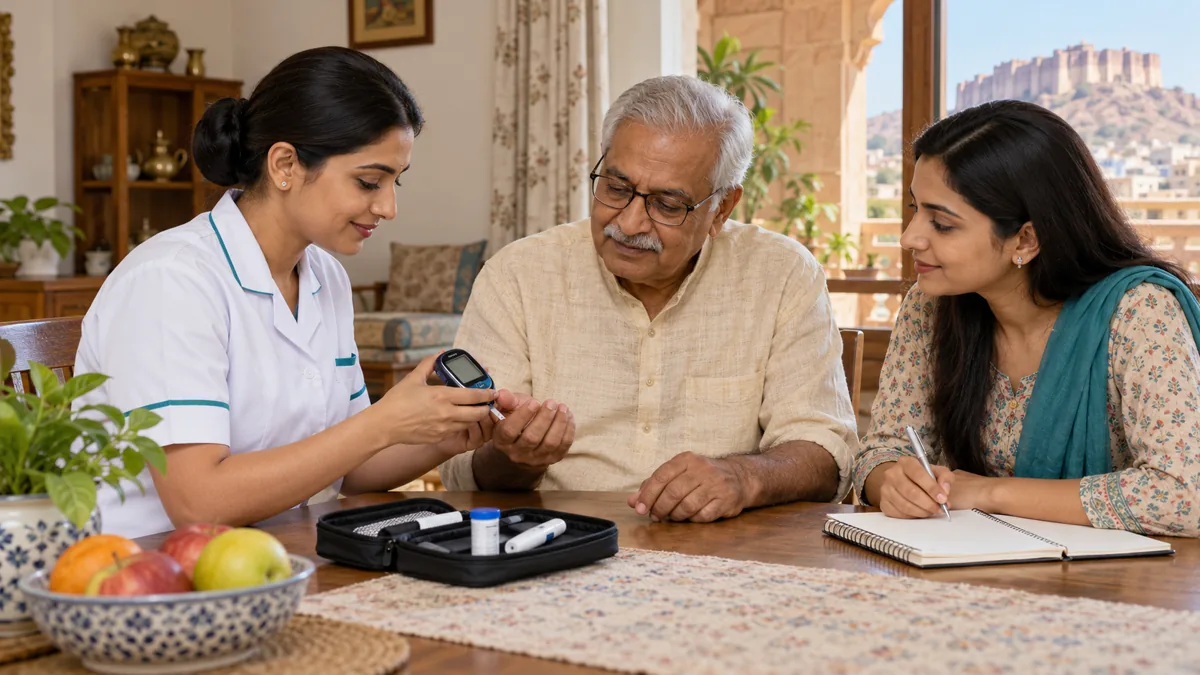
A practical guide to glucose monitoring, medicines, meals, foot care, sick-day planning and professional diabetes support at home in Jodhpur.
Managing diabetes care at home in Jodhpur involves much more than checking blood sugar occasionally or avoiding sweets. A safe home plan connects glucose monitoring, medicines, meals, hydration, physical activity, foot care, laboratory tests and regular medical review. It also tells the patient and family what to do when readings move outside the agreed range or illness changes the routine.
This coordination is particularly important for older adults, people using insulin, patients recovering after hospitalisation and anyone who depends on a family caregiver. Jodhpur’s hot climate also creates practical concerns around hydration, insulin storage, test-strip handling and outdoor activity. A written plan can prevent small problems from becoming emergencies.
This guide explains how families can organise diabetes care at home, what equipment is useful, how to keep records, when professional home support may help and which warning signs require urgent hospital care.
Diabetes targets are not identical for everyone. A healthy younger adult, an older person with several medical conditions, a pregnant woman and a patient at high risk of low blood sugar may need different goals and monitoring schedules. The treating doctor should provide clear instructions covering:
Keep the plan where the patient and caregivers can find it. Include the doctor’s contact details, an emergency contact, allergies, current diagnoses and a complete medicine list. Update it after every meaningful treatment change.
A small, organised care area reduces missed doses and inaccurate readings. It should be clean, dry, away from direct sunlight and out of the reach of children. Useful items may include:
Do not share lancing devices, even between family members. Store strips in their original closed container and follow the manufacturer’s temperature and humidity instructions. Heat, moisture, expired strips and contamination can affect accuracy.
Home glucose monitoring is most useful when each reading answers a question. Random testing without a plan can create anxiety without improving treatment. People using insulin usually need more frequent checks than many people using non-insulin treatment, but frequency and timing should be individualised.
The 2026 American Diabetes Association Standards of Care recommend that monitoring devices be selected according to the person’s treatment, circumstances and preferences. People using insulin may need checks before meals, after meals, at bedtime, around exercise, when low or high glucose is suspected and before safety-critical tasks. The detailed ADA blood glucose monitoring guidance also stresses the importance of accurate meters and properly stored strips.
Food residue on a finger can produce a falsely high result. If a reading is unexpected and does not match how the patient feels, wash and dry the hands, repeat the test with a new strip and contact the care team if the result remains concerning. Never change an insulin dose solely because of one unusual reading unless the doctor has given a specific correction plan.
For more detail on meters, testing schedules and laboratory follow-up, read our guide to diabetes monitoring at home in Jodhpur.
A glucometer shows glucose at one moment. HbA1c estimates average glucose exposure over approximately the previous two to three months. Both can be useful, but they answer different questions. A few normal home readings do not prove that glucose is controlled throughout the day, and HbA1c does not reveal every episode of low glucose or rapid variation.
The ADA recommends assessing glycaemic status at least twice a year for people who are stable and meeting goals, and more often, such as every three months, when goals are not being met, treatment has changed or health status is changing. The exact schedule should be set by the clinician.
If travel is difficult, a professionally collected blood test at home in Jodhpur can support planned laboratory monitoring. Results still need medical interpretation rather than being treated as a stand-alone diagnosis or dose instruction.
Missed doses, double doses and incorrect timing are common home-care risks. Use a written chart or labelled organiser where appropriate, but keep medicines in their original packaging until the family understands storage requirements and the organiser is suitable. Record who gave the dose and when if several caregivers are involved.
Do not stop diabetes tablets or insulin when readings improve unless the prescribing clinician changes the plan. Normal readings may mean the current treatment is working. Similarly, do not increase a dose after a high reading without following an agreed correction plan.
Insulin can lose effectiveness when exposed to excessive heat, direct sun or freezing. Unopened insulin usually requires refrigeration, while storage limits for an insulin currently in use vary by product and device. Always follow the package instructions and pharmacy guidance for the exact insulin.
Keep insulin away from freezer compartments and do not place it directly against ice packs. During travel, use an appropriate insulated carrier while preventing direct contact with frozen material. Never leave insulin in a parked car or on a sunny windowsill. If insulin has been exposed to extreme temperature, looks unusual or is past its permitted in-use period, ask a pharmacist or clinician before using it.
A person with diabetes does not usually need a separate plate of expensive “diabetic food.” A balanced household meal can include non-starchy vegetables, an appropriate protein source and a measured portion of higher-fibre carbohydrate. Indian options may include sabzi, salad, dal or chana, curd, paneer, eggs, fish or lean meat with a suitable quantity of roti, rice or millet based on the individual plan.
Practical home principles include:
Older adults should also be assessed for poor appetite, chewing difficulty, unintended weight loss and loss of muscle. Aggressive dietary restriction can be harmful when nutrition is already inadequate.
Jodhpur’s heat can increase fluid loss and may make high glucose more dangerous because glucose itself can increase urination. Encourage regular fluids if the patient has not been placed on a fluid restriction for heart or kidney disease. Water is generally the simplest option.
Watch for dry mouth, very dark urine, dizziness, unusual weakness, rapid heartbeat, confusion or reduced urination. A patient with vomiting, diarrhoea, fever or persistently high glucose can become dehydrated quickly. People taking medicines that affect fluid balance may need personalised sick-day instructions.
Outdoor exercise should be moved to a cooler time of day when temperatures are high. Appropriate footwear, shade and hydration are important, especially for older adults and people with neuropathy.
Regular activity can improve insulin sensitivity, blood pressure, strength, mobility and mood. For many adults, the long-term goal is at least 150 minutes of moderate aerobic activity per week plus resistance training two or three times weekly, but the starting point should reflect current fitness and complications.
Walking indoors, using a safe corridor, completing chair-based exercises or following an individual physiotherapy plan may be more practical than outdoor activity during extreme heat. Break up long periods of sitting with brief movement when safe.
People taking insulin or medicines that can cause low glucose should ask how to monitor around activity and how to carry fast-acting carbohydrate. Chest pain, faintness, severe breathlessness or a new foot injury requires stopping exercise and seeking medical advice.
Diabetes can reduce sensation and blood flow, allowing a small blister, crack or burn to worsen before the person feels significant pain. Inspect the tops, soles, heels and spaces between the toes daily. A mirror or family caregiver can help when bending or vision is difficult.
Wash feet gently and dry carefully, especially between the toes. Moisturiser can be used on dry skin but should not be placed between the toes. Wear well-fitting footwear and check the inside for stones, rough seams or foreign objects. Avoid walking barefoot, including at home, and do not use hot-water bottles or heating pads on numb feet.
The ADA recommends a comprehensive foot evaluation at least annually, with more frequent checks for people with sensory loss, deformity, poor circulation or a previous ulcer. Contact a clinician promptly for a blister, cut, redness, swelling, discharge, dark colour, warmth or a wound that is not healing.
Fever, infection, vomiting and dehydration can raise glucose even when a person is eating less. Illness can also increase the risk of low glucose if food intake falls while certain medicines continue. A sick-day plan should specify which medicines to continue, which may need temporary review, how often to check glucose, when to test ketones and when to call the doctor.
Do not invent these rules during an illness. The current ADA guidance notes that treatment may need reassessment when oral intake cannot be maintained or acute kidney injury is a concern. The right instruction depends on the medicine, so patients should follow their own clinician’s plan.
The US Centers for Disease Control and Prevention advises more frequent glucose checks during illness, adequate fluids and urgent evaluation for warning signs such as breathing difficulty, ketones or inability to keep liquids down. Its diabetes sick-day guidance provides a useful overview, but an individual plan should take priority.
Hypoglycaemia is usually defined as glucose below 70 mg/dL, although individual instructions may vary. Symptoms can include sweating, shaking, hunger, palpitations, dizziness, irritability, confusion or unusual sleepiness. Some people, particularly those with long-standing diabetes, may have few warning symptoms.
If the person is awake and able to swallow, follow the clinician’s agreed low-glucose treatment plan using a measured amount of fast-acting glucose, then recheck at the specified time. Chocolate and high-fat sweets act more slowly and are not ideal first treatment. Once glucose recovers, further food may be needed depending on the next meal and the medicine involved.
If the person is unconscious, having a seizure or unable to swallow, do not give food or drink by mouth. Use prescribed glucagon if available and trained to do so, call emergency services and place the person safely on their side while waiting for help.
Home support is suitable for planned monitoring, education, stable chronic care and selected non-emergency reviews. It is not a substitute for emergency care. Go to hospital or seek emergency help for:
If you are uncertain whether a home visit is appropriate, review our guide on when to arrange a doctor home visit in Jodhpur and when to go to hospital.
Some patients can manage independently after education. Others benefit from temporary or ongoing professional support. A trained home-care professional may help with:
The professional should work from a physician-approved plan and document findings clearly. A home nurse should not independently rewrite prescriptions or promise that home care can manage an emergency.
Families exploring support can review MediKold home healthcare services and discuss which level of care matches the patient’s mobility, treatment and supervision needs.
This review should take only a few minutes once the system is organised. Its purpose is to find patterns early, not to create a complicated daily burden.
The schedule depends on the type of diabetes, medicine or insulin plan, glucose stability, pregnancy, illness and risk of low glucose. People using insulin often need more frequent checks. Ask the treating clinician for specific times and targets rather than using a generic schedule.
Yes, many older adults can manage safely at home with an individual plan and appropriate support. Vision, memory, hand strength, fall risk, nutrition and the ability to recognise low glucose should be assessed. A caregiver or professional nurse may be needed when self-management is difficult.
A nurse can administer insulin and follow a written correction or titration plan authorised by the treating clinician. Independent dose changes should not be made without appropriate prescribing authority and communication with the medical team.
Follow the exact product label. Unopened insulin usually requires refrigeration, while in-use storage limits vary. Protect it from direct sunlight, excessive heat and freezing. Use an appropriate insulated carrier during travel and avoid direct contact with ice packs.
No. A glucometer provides useful day-to-day readings, but diabetes care also requires planned HbA1c testing and assessment of blood pressure, cholesterol, kidney health, eyes, feet and other individual risks.
Record glucose readings with time and meal context, medicine or insulin doses, symptoms, low-glucose treatment, illness, food intake and relevant vital signs. Keep notes concise so a doctor can identify patterns quickly.
Seek urgent care for unconsciousness, seizure, breathing difficulty, chest pain, stroke symptoms, ketones with illness, inability to keep fluids down, severe dehydration, persistent severe low glucose or very high glucose with confusion or drowsiness.
No. Home care can make monitoring and treatment easier, but regular clinical review remains necessary to adjust treatment and screen for complications. Home and clinic care should work together.
The safest diabetes care at home in Jodhpur is not the most complicated routine. It is the one that clearly connects monitoring, medicines, meals, movement, foot care and medical follow-up. Written instructions, organised supplies and a shared caregiver record reduce confusion and make it easier to respond early when something changes.
If you need help organising glucose checks, home sample collection, medication support or a non-emergency clinical review, request a MediKold home-care appointment in Jodhpur. The team can help determine whether the patient’s needs are suitable for home support or require clinic or hospital care.
This article is for general education and does not replace personalised medical advice. Never change diabetes medication or insulin without guidance from the treating clinician. Emergency symptoms require immediate hospital care.
घर पर oxygen कब जरूरी होती है, pulse oximeter reading कैसे समझें, और किन लक्षणों पर hospital जाना चाहिए।
घर पर नेबुलाइज़र के सुरक्षित उपयोग, सफाई, दवा संबंधी सावधानी और कब तुरंत अस्पताल जाना चाहिए, इसकी आसान जानकारी।
घर पर ऑक्सीजन के लिए कंसंट्रेटर और सिलेंडर में क्या अंतर है? उपयोग, बिजली बैकअप, सुरक्षा और डॉक्टर से पूछने वाले सवाल समझें।
Insulin can lose effectiveness when exposed to excessive heat, direct sun or freezing. Unopened insulin usually requires refrigeration, while storage limits for an insulin currently in use vary by product and device. Always follow the package instructions and pharmacy guidance for the exact insulin.
The schedule depends on the type of diabetes, medicine or insulin plan, glucose stability, pregnancy, illness and risk of low glucose. People using insulin often need more frequent checks. Ask the treating clinician for specific times and targets rather than using a generic schedule.
Yes, many older adults can manage safely at home with an individual plan and appropriate support. Vision, memory, hand strength, fall risk, nutrition and the ability to recognise low glucose should be assessed. A caregiver or professional nurse may be needed when self-management is difficult.
A nurse can administer insulin and follow a written correction or titration plan authorised by the treating clinician. Independent dose changes should not be made without appropriate prescribing authority and communication with the medical team.
Follow the exact product label. Unopened insulin usually requires refrigeration, while in-use storage limits vary. Protect it from direct sunlight, excessive heat and freezing. Use an appropriate insulated carrier during travel and avoid direct contact with ice packs.
No. A glucometer provides useful day-to-day readings, but diabetes care also requires planned HbA1c testing and assessment of blood pressure, cholesterol, kidney health, eyes, feet and other individual risks.
Record glucose readings with time and meal context, medicine or insulin doses, symptoms, low-glucose treatment, illness, food intake and relevant vital signs. Keep notes concise so a doctor can identify patterns quickly.
Seek urgent care for unconsciousness, seizure, breathing difficulty, chest pain, stroke symptoms, ketones with illness, inability to keep fluids down, severe dehydration, persistent severe low glucose or very high glucose with confusion or drowsiness.
No. Home care can make monitoring and treatment easier, but regular clinical review remains necessary to adjust treatment and screen for complications. Home and clinic care should work together.
Stay updated with our latest medical news, insights, and exclusive health tips delivered straight to your inbox.