Urinary Catheter Care at Home in Jodhpur
A family guide to urinary catheter care at home in Jodhpur, including hygiene, drainage bag safety, warning signs, and when a trained nurse is needed.
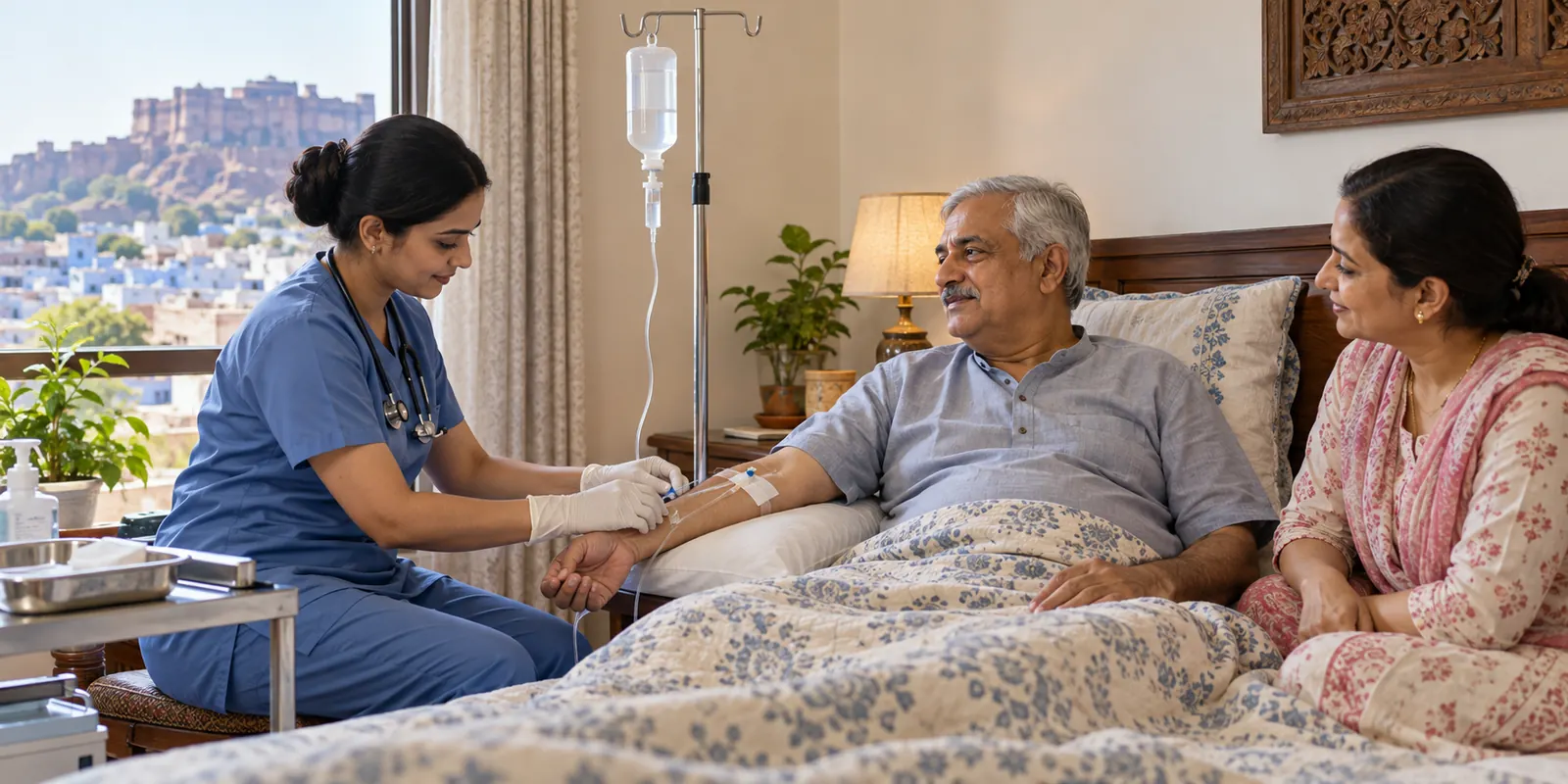
जानें घर पर IV drip या saline कब सुरक्षित हो सकती है, किन मरीजों को hospital जाना चाहिए और treatment के दौरान कौन से warning signs देखें।
कमजोरी, उल्टी, दस्त या बुखार के बाद परिवार अक्सर पूछता है कि क्या घर पर IV drip या saline लगाई जा सकती है। कुछ स्थिर मरीजों में डॉक्टर की जांच और स्पष्ट prescription के बाद trained nurse की निगरानी में IV therapy घर पर दी जा सकती है। लेकिन हर कमजोरी dehydration नहीं होती, हर dehydration में drip जरूरी नहीं होती, और गंभीर मरीज को घर पर saline लगाकर hospital जाने में देरी करना खतरनाक हो सकता है।
IV fluid एक medical treatment है। सही fluid, मात्रा, गति और monitoring मरीज की उम्र, diagnosis, blood pressure, urine output, kidney, heart, liver, diabetes, ongoing fluid loss और laboratory reports पर निर्भर करती है। गलत fluid या गलत गति से fluid overload, sodium imbalance, infection, vein inflammation और सांस की तकलीफ जैसी complications हो सकती हैं।
इस guide में समझिए कि home IV drip किन परिस्थितियों में consider की जा सकती है, किन warning signs में hospital जाना चाहिए, और family को treatment शुरू होने से पहले कौन से safety questions पूछने चाहिए।
IV का अर्थ intravenous है, यानी fluid या medicine को नस के रास्ते देना। हाथ या बांह की vein में एक छोटा plastic cannula लगाया जाता है। उससे tubing के माध्यम से prescribed fluid या medicine दी जाती है। Cannula लगाने, line जोड़ने और fluid चलाने के लिए साफ technique और trained healthcare professional जरूरी है।
लोग आम भाषा में हर IV fluid को saline कहते हैं, लेकिन सभी bags एक जैसी नहीं होतीं। अलग fluids में sodium, chloride, glucose या अन्य electrolytes की composition अलग हो सकती है। कौन सा fluid देना है, कितनी मात्रा देनी है और किस speed से देना है, यह केवल clinical assessment के बाद तय होना चाहिए। Family या caregiver को bag चुनकर स्वयं drip नहीं चलानी चाहिए।
International guidance का मूल सिद्धांत है कि IV fluid तभी दी जाए जब मरीज की जरूरत oral या enteral route से पूरी न हो सके। जैसे ही सुरक्षित तरीके से पीना या feeding संभव हो, IV therapy की आवश्यकता दोबारा review होनी चाहिए।
अक्सर नहीं। हल्की dehydration में व्यक्ति जागरूक है, छोटे घूंट पी सकता है, बार-बार vomiting नहीं हो रही और कोई emergency sign नहीं है, तो oral fluids या oral rehydration solution अधिक सरल और सुरक्षित विकल्प हो सकते हैं। दस्त या उल्टी में केवल पानी ही नहीं, salts भी कम हो सकते हैं, इसलिए suitable oral rehydration plan उपयोगी रहता है।
IV fluid पर विचार तब किया जाता है जब patient पर्याप्त fluid पी नहीं पा रहा, oral fluid बार-बार बाहर आ रहा, dehydration clinically significant है, या डॉक्टर को किसी medicine को vein से देना जरूरी लगता है। यह निर्णय symptoms देखकर family को अकेले नहीं लेना चाहिए।
बहुत अधिक प्यास, मुंह सूखना, गहरा urine, कम urine, चक्कर, कमजोरी और थकान dehydration के संकेत हो सकते हैं। लेकिन यही symptoms infection, low blood pressure, uncontrolled diabetes, anaemia, kidney problem या दूसरी illness में भी हो सकते हैं। Diagnosis जाने बिना drip लगाने से असली बीमारी छिप सकती है और जरूरी treatment में delay हो सकता है।
Home IV therapy का निर्णय case by case होना चाहिए। सामान्य तौर पर नीचे दी गई conditions पूरी हों तो डॉक्टर इसे consider कर सकते हैं:
उदाहरण के लिए, doctor द्वारा assessed और stable adult में oral intake अस्थायी रूप से कम होने पर limited fluid plan दिया जा सकता है। कुछ post-operative या chronic-care patients को discharge plan के अनुसार prescribed IV medicine की जरूरत हो सकती है। ऐसे cases में भी treatment को automatic daily routine नहीं बनाना चाहिए। हर dose और line की आवश्यकता review की जानी चाहिए।
घर पर assessment कब उपयोगी हो सकता है, यह समझने के लिए Jodhpur में doctor home visit कब उपयोगी है और hospital कब जाना चाहिए पढ़ें।
कुछ मरीजों में fluid balance बहुत जल्दी बिगड़ सकता है। इनमें home drip शुरू करने के बजाय hospital assessment या specialist advice अधिक सुरक्षित होती है:
इन situations में fluid की छोटी गलती भी lungs में पानी, electrolyte disturbance, abnormal heartbeat या worsening organ function पैदा कर सकती है। Hospital में clinical examination, laboratory testing और response के अनुसार plan जल्दी बदला जा सकता है।
नीचे दिए गए signs में घर पर IV लगाने की कोशिश न करें और ongoing drip हो तो treating professional को तुरंत बताएं। Local emergency service या nearest hospital से सहायता लें:
Sepsis कुछ घंटों में गंभीर हो सकता है। Confusion, बहुत तेज सांस, cold or blotchy skin, अत्यधिक shivering और बहुत कम urine को सामान्य बुखार मानकर घर पर wait नहीं करना चाहिए।
Home care और hospital care के बीच सही decision पर अधिक जानकारी के लिए घर पर healthcare कब सुरक्षित है और कब नहीं guide देखें।
Order में indication, fluid या medicine, मात्रा, administration plan, monitoring और stop criteria स्पष्ट होने चाहिए। केवल फोन पर किसी परिचित की सलाह, पुरानी prescription या previous illness में इस्तेमाल हुए fluid पर भरोसा न करें।
Nurse या doctor को symptoms, allergy, medicines और relevant medical history पता होनी चाहिए। Blood pressure, pulse, temperature, hydration signs और जरूरत के अनुसार oxygen saturation या glucose check किया जा सकता है। Heart, kidney या liver condition में recent reports और treating doctor की approval महत्वपूर्ण है।
Bag पर fluid name, expiry, seal और clarity check होनी चाहिए। Medicine add करनी हो तो उसे केवल qualified professional prescription के अनुसार करे। Unknown injection या supplement को saline bag में मिलाना unsafe है।
Hand hygiene, clean equipment, skin antisepsis और single-use supplies infection prevention के मूल steps हैं। Used cannula, needle और tubing को household waste में खुला नहीं फेंकना चाहिए। Sharps disposal की व्यवस्था provider के protocol के अनुसार होनी चाहिए।
Family के पास treating professional और nearby hospital का contact हो। यह भी स्पष्ट हो कि किस symptom पर drip रोकनी है, किसे call करना है और transfer कैसे होगा। Home therapy तभी सुरक्षित है जब escalation plan पहले से मौजूद हो।
Trained professional को patient और IV site दोनों monitor करने चाहिए। Monitoring diagnosis और treatment के अनुसार बदलती है, लेकिन सामान्य checks में शामिल हो सकते हैं:
Drip का flow तेज या धीमा दिखने पर family को clamp adjust नहीं करना चाहिए। Flow रुकने पर line को दबाना, flush करना या cannula को दोबारा अंदर करना unsafe है। Nurse को site और equipment check करने दें।
Cannula vein से बाहर आ जाए तो fluid आसपास के tissue में जा सकता है। Site पर swelling, tightness, cool skin, pain या leakage हो सकती है। कुछ medicines tissue को गंभीर damage पहुंचा सकती हैं, इसलिए ऐसे signs को तुरंत report करना चाहिए।
Vein में inflammation से cannula के रास्ते में pain, redness, warmth या hardness हो सकती है। Line को continue करना problem बढ़ा सकता है। Professional assessment जरूरी है।
Skin puncture और catheter के कारण local या bloodstream infection का risk होता है। Increasing redness, pus, fever, shivering या sudden deterioration warning signs हैं। Clean technique और line की daily necessity review करना risk कम करने में मदद करता है।
जरूरत से अधिक या बहुत तेजी से fluid मिलने पर lungs में fluid जमा हो सकता है। सांस फूलना, cough, oxygen गिरना, leg swelling या अचानक बेचैनी warning signs हैं। Heart और kidney disease में risk अधिक हो सकता है।
गलत fluid शरीर के sodium, glucose या acid-base balance को बिगाड़ सकता है। Headache, confusion, weakness, vomiting, seizure या abnormal heartbeat गंभीर संकेत हो सकते हैं। Laboratory monitoring की जरूरत clinical condition पर निर्भर करती है।
IV medicine से allergy या severe reaction तेजी से हो सकती है। Rash, itching, facial swelling, wheeze, breathing difficulty या collapse emergency हैं। ऐसी medicine घर पर तभी दी जानी चाहिए जब prescription, trained supervision और emergency response उपलब्ध हो।
Routine weakness, tiredness या hangover के लिए बिना diagnosis IV fluid या vitamin mixture लगाना evidence-based treatment नहीं माना जाना चाहिए। Fatigue के पीछे anaemia, infection, thyroid disease, sleep problem, diabetes, medicine side effect या heart condition हो सकती है। Drip से कुछ समय के लिए बेहतर महसूस होना underlying cause को treat नहीं करता।
Vitamin या mineral को IV देना भी automatically safe नहीं है। अनावश्यक dose, contamination, allergy और electrolyte problems हो सकती हैं। पहले symptoms का कारण समझना अधिक महत्वपूर्ण है।
Provider से पूछें कि nurse की qualification कैसे verify की जाती है, doctor order कैसे reviewed होता है, infection-control protocol क्या है, supplies कौन लाता है, documentation कैसे होती है और complication पर escalation कौन manage करेगा। केवल “drip लगा देंगे” कहना पर्याप्त clinical plan नहीं है।
Provider selection के लिए Jodhpur में home nursing agency चुनने से पहले पूछे जाने वाले सवाल पढ़ें।
Selected stable patient में doctor की assessment, written prescription, trained nurse, clean technique, monitoring और emergency plan के साथ home saline दी जा सकती है। बिना assessment या self-treatment safe नहीं है।
नहीं। हल्के cases में oral rehydration पर्याप्त हो सकती है। लगातार vomiting, severe dehydration, low blood pressure, confusion या बहुत कम urine होने पर medical assessment जरूरी है और hospital care की जरूरत हो सकती है।
नहीं। Cannula insertion और IV administration trained healthcare professional द्वारा prescription के अनुसार किया जाना चाहिए। गलत placement, infection, bleeding और fluid error का risk रहता है।
Flow को स्वयं adjust न करें। Nurse को तुरंत बताएं। Pain, swelling, leakage, redness या tightness infiltration या phlebitis का संकेत हो सकता है और line की assessment जरूरी है।
Heart failure या swelling वाले मरीज में fluid overload का risk अधिक होता है। ऐसे patient को treating doctor की specific approval और close monitoring चाहिए, और कई situations में hospital अधिक सुरक्षित होता है।
Kidney impairment में fluid और electrolytes शरीर से ठीक तरह बाहर नहीं निकल सकते। Fluid type और मात्रा specialist assessment पर निर्भर करती है। Low urine या dialysis patient में home drip शुरू न करें।
कोई universal speed नहीं है। Rate fluid, indication, age, heart and kidney function, ongoing losses और clinical response पर निर्भर करती है। केवल prescriber और trained professional इसे तय या बदलें।
Breathing difficulty, chest pain, confusion, collapse, blue or blotchy skin, seizure, stroke symptoms, severe bleeding, very low urine या rapid deterioration में emergency help लें। Home drip के कारण hospital transfer delay न करें।
घर पर IV drip सुविधा हो सकती है, लेकिन सुविधा safety से अधिक महत्वपूर्ण नहीं है। Stable patient, clear diagnosis, doctor का written plan, trained nurse, clean equipment, monitoring और emergency escalation मिलकर home therapy को safer बनाते हैं।
गंभीर dehydration, sepsis, breathing problem, shock, very low urine, uncontrolled diabetes, heart or kidney failure, pregnancy complications, छोटे बच्चे या sudden deterioration में hospital assessment चुनें। जब patient पी सकता है और oral rehydration पर्याप्त है, unnecessary IV से बचना भी अच्छी medical care का हिस्सा है।
Medical disclaimer: यह article general education के लिए है। यह व्यक्तिगत diagnosis, prescription या emergency advice का विकल्प नहीं है। IV fluid या medicine केवल qualified clinician के आदेश और trained professional की निगरानी में दी जानी चाहिए।
A family guide to urinary catheter care at home in Jodhpur, including hygiene, drainage bag safety, warning signs, and when a trained nurse is needed.
A practical guide to safe dressing and wound care at home, including clean technique, infection warning signs, diabetes precautions, and when to call a professional.
A practical guide to glucose monitoring, medicines, meals, foot care, sick-day planning and professional diabetes support at home in Jodhpur.
Order में indication, fluid या medicine, मात्रा, administration plan, monitoring और stop criteria स्पष्ट होने चाहिए। केवल फोन पर किसी परिचित की सलाह, पुरानी prescription या previous illness में इस्तेमाल हुए fluid पर भरोसा न करें।
Nurse या doctor को symptoms, allergy, medicines और relevant medical history पता होनी चाहिए। Blood pressure, pulse, temperature, hydration signs और जरूरत के अनुसार oxygen saturation या glucose check किया जा सकता है। Heart, kidney या liver condition में recent reports और treating doctor की approval महत्वपूर्ण है।
Bag पर fluid name, expiry, seal और clarity check होनी चाहिए। Medicine add करनी हो तो उसे केवल qualified professional prescription के अनुसार करे। Unknown injection या supplement को saline bag में मिलाना unsafe है।
Hand hygiene, clean equipment, skin antisepsis और single-use supplies infection prevention के मूल steps हैं। Used cannula, needle और tubing को household waste में खुला नहीं फेंकना चाहिए। Sharps disposal की व्यवस्था provider के protocol के अनुसार होनी चाहिए।
Family के पास treating professional और nearby hospital का contact हो। यह भी स्पष्ट हो कि किस symptom पर drip रोकनी है, किसे call करना है और transfer कैसे होगा। Home therapy तभी सुरक्षित है जब escalation plan पहले से मौजूद हो।
Cannula vein से बाहर आ जाए तो fluid आसपास के tissue में जा सकता है। Site पर swelling, tightness, cool skin, pain या leakage हो सकती है। कुछ medicines tissue को गंभीर damage पहुंचा सकती हैं, इसलिए ऐसे signs को तुरंत report करना चाहिए।
Vein में inflammation से cannula के रास्ते में pain, redness, warmth या hardness हो सकती है। Line को continue करना problem बढ़ा सकता है। Professional assessment जरूरी है।
Skin puncture और catheter के कारण local या bloodstream infection का risk होता है। Increasing redness, pus, fever, shivering या sudden deterioration warning signs हैं। Clean technique और line की daily necessity review करना risk कम करने में मदद करता है।
जरूरत से अधिक या बहुत तेजी से fluid मिलने पर lungs में fluid जमा हो सकता है। सांस फूलना, cough, oxygen गिरना, leg swelling या अचानक बेचैनी warning signs हैं। Heart और kidney disease में risk अधिक हो सकता है।
गलत fluid शरीर के sodium, glucose या acid-base balance को बिगाड़ सकता है। Headache, confusion, weakness, vomiting, seizure या abnormal heartbeat गंभीर संकेत हो सकते हैं। Laboratory monitoring की जरूरत clinical condition पर निर्भर करती है।
IV medicine से allergy या severe reaction तेजी से हो सकती है। Rash, itching, facial swelling, wheeze, breathing difficulty या collapse emergency हैं। ऐसी medicine घर पर तभी दी जानी चाहिए जब prescription, trained supervision और emergency response उपलब्ध हो।
Selected stable patient में doctor की assessment, written prescription, trained nurse, clean technique, monitoring और emergency plan के साथ home saline दी जा सकती है। बिना assessment या self-treatment safe नहीं है।
नहीं। हल्के cases में oral rehydration पर्याप्त हो सकती है। लगातार vomiting, severe dehydration, low blood pressure, confusion या बहुत कम urine होने पर medical assessment जरूरी है और hospital care की जरूरत हो सकती है।
नहीं। Cannula insertion और IV administration trained healthcare professional द्वारा prescription के अनुसार किया जाना चाहिए। गलत placement, infection, bleeding और fluid error का risk रहता है।
Flow को स्वयं adjust न करें। Nurse को तुरंत बताएं। Pain, swelling, leakage, redness या tightness infiltration या phlebitis का संकेत हो सकता है और line की assessment जरूरी है।
Heart failure या swelling वाले मरीज में fluid overload का risk अधिक होता है। ऐसे patient को treating doctor की specific approval और close monitoring चाहिए, और कई situations में hospital अधिक सुरक्षित होता है।
Kidney impairment में fluid और electrolytes शरीर से ठीक तरह बाहर नहीं निकल सकते। Fluid type और मात्रा specialist assessment पर निर्भर करती है। Low urine या dialysis patient में home drip शुरू न करें।
कोई universal speed नहीं है। Rate fluid, indication, age, heart and kidney function, ongoing losses और clinical response पर निर्भर करती है। केवल prescriber और trained professional इसे तय या बदलें।
Breathing difficulty, chest pain, confusion, collapse, blue or blotchy skin, seizure, stroke symptoms, severe bleeding, very low urine या rapid deterioration में emergency help लें। Home drip के कारण hospital transfer delay न करें।
Stay updated with our latest medical news, insights, and exclusive health tips delivered straight to your inbox.